I have been covering Atlanta’s food scene for years, but lately I have been thinking about something beyond the restaurant openings and food hall expansions. Where do Atlantans actually go to buy the ingredients that fill their fridges? Not the Kroger run for milk and cereal, but the Saturday morning ritual of hunting down vine-ripened tomatoes and talking to the person who grew them.
Atlanta’s farmers market scene is more diverse than most people realize. We are talking about everything from a new indoor market anchored by a James Beard Award-winning chef to a century-old institution that has been feeding the city since Woodrow Wilson was president. Some are tucked into church parking lots in neighborhoods you would never expect. Others sit right inside MARTA stations. I spent weeks visiting markets across the metro, talking to vendors, and figuring out what makes each one worth your time. Here is what I found.
1. Upper West Market (Opening May 2026)
Collier Road, Underwood Hills
Upper West Market is one of the city’s few farmers markets that is fully indoors, and if you have ever sweated through a July tomato run or gotten rained out in March, you already understand why that matters. This adaptive reuse project converted a vacant Collier Road office and warehouse complex into a 33-stall vendor space that looks more European market hall than Southern roadside stand.
The anchor tenant is James Beard Award-winning chef Anne Quatrano, whose Summerland Cafe signals immediately that this is not just about produce. You are looking at a combination market, wine bar from Hop City, cooking classes, and event space all under one weatherproof roof. Underwood Hills has been filling in with residential development but has been missing that central gathering spot that serves a practical daily purpose. Upper West Market could become exactly that.
Note: Upper West Market insists it is not a food hall. They are right, and that distinction matters for what you will find there.
2. Peachtree Road Farmers Market
Saturdays 8:30am-12pm, Cathedral of St. Philip, Buckhead
Peachtree Road Farmers Market is Atlanta’s largest producer-only market, and that distinction matters more than you might think. Every vendor here either grew what they are selling or has a direct relationship with the farm that did. No middlemen, no grocery store rejects, no produce that has been sitting in a warehouse for two weeks.
The Saturday morning scene in the Cathedral of St. Philip parking lot feels like what farmers markets used to be before they became Instagram backdrops. You will find certified naturally grown and organic produce, dairy, and meats straight from farmers who can tell you exactly how their cows spent the winter. The market runs March through December only, so plan accordingly.
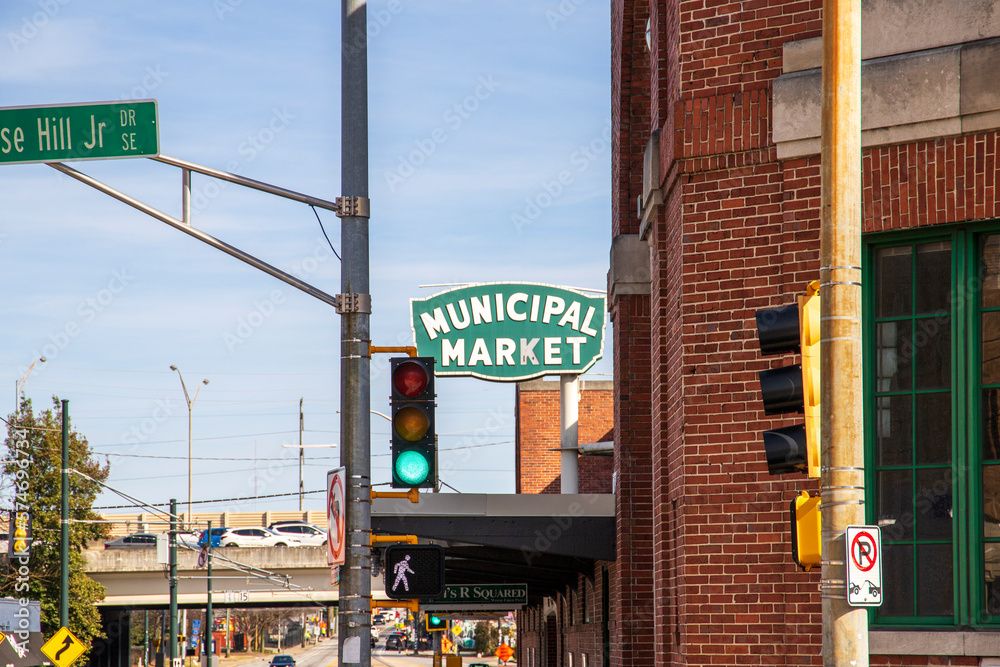
3. Sweet Auburn Curb Market (Municipal Market)
Daily 8am-8pm (closed Sundays), 209 Edgewood Avenue, Sweet Auburn
The Sweet Auburn Curb Market has been feeding Atlanta since 1918, which makes it older than most of the neighborhoods people think of as “historic Atlanta.” Established as an open-air market on land cleared by the Great Atlanta Fire of 1917, the Atlanta Woman’s Club raised nearly $300,000 for the permanent brick and concrete building that opened in 1924 and still stands today.
What makes this market different from every other one on this list is that it is truly woven into daily Atlanta life. Open six days a week, housing 30 local businesses, it functions as both a traditional market and a food hall. Buy farm-fresh produce and then sit down for lunch at Arepa Mia or Sweet Auburn BBQ.
The market’s history is complicated and important. During the Jim Crow era, Black vendors were only permitted to sell from stalls lining the curb outside while white vendors operated inside the building, hence the “Curb Market” nickname. Black shoppers could enter, but Black sellers could not. Today it is a vital part of the Sweet Auburn Historic District and accessible via the Atlanta Streetcar.
4. The Green Market at Piedmont Park
Saturdays 9am-1pm, Piedmont Park (12th Street entrance)
For more than 20 years, the Green Market at Piedmont Park has been connecting Atlanta’s community with local farmers in the heart of the city. The location is unbeatable, the vendor lineup is consistently strong, and it feels like a true neighborhood gathering spot even though it sits in one of Atlanta’s most visited parks.
You can bike here via the BeltLine from Inman Park and Old Fourth Ward, or walk from Midtown and Virginia-Highland. The MARTA connection at Arts Center and Midtown stations makes it accessible without a car. The vendor mix includes regionally grown produce, farm-fresh meats, artisan cheeses, and fresh-cut flowers, plus chef demonstrations and live music.
5. Grant Park Farmers Market
Sundays 9am-1pm, year-round, across from the Beacon
Grant Park Farmers Market is the kind of market that becomes part of your Sunday routine. Located across from the Beacon restaurant in Grant Park, this year-round market has built a loyal following among intown residents who appreciate the relaxed Sunday morning vibe.
The vendor lineup includes locally grown produce, meats, artisanal foods, jams, pickled treats, and Latin specialties like pupusas. Plenty of seating and picnic areas, kids playing nearby, neighbors catching up over coffee. It is one of the few markets that stays open year-round, rain or shine, which creates the kind of vendor consistency that builds real relationships.
6. Morningside Farmers Market
Saturdays 8am-11:30am, Morningside Presbyterian Church
Morningside Farmers Market holds the distinction of being Atlanta’s first and only market requiring all produce to be certified organic. Since 1995, this intimate neighborhood market has maintained strict standards. If you are buying fruits or vegetables here, they are certified organic and sold directly by the farmers who grew them.
That requirement creates a different shopping experience. You will find specialty items like heirloom garlic, wild plums, cold-pressed juices, and seasonal flowers alongside the basics. The chef demonstrations tend to be more educational and less crowded than the larger markets, plus local favorites like handmade pasta and artisanal granola.
7. Freedom Farmers Market
Saturdays 8:30am-12pm, year-round, The Carter Center
Freedom Farmers Market brings sustainably grown local foods to intown Atlanta from its location outside the Jimmy Carter Presidential Library. For more than a decade, this market has connected neighborhoods from Little Five Points to Candler Park with fresh produce, dairy, grass-fed meats, and baked goods.
What I appreciate about Freedom Market is the accessibility. It is reachable via walking and biking trails from downtown, plus MARTA bus routes, which makes it one of the few markets that does not require a car. The location near Freedom Park creates a natural gathering spot where you can grab coffee and pastries while browsing, often with live music providing a soundtrack.
8. East Atlanta Village Farmers Market
Thursdays 4pm-8pm, March-November, 572 Stokeswood Avenue
East Atlanta Village Farmers Market has been anchoring this neighborhood since 2006. The Thursday evening timing makes it unique. Instead of competing for Saturday morning attention, it creates a weeknight destination for fresh produce, organic meats, artisan breads, and handmade goods.
The location across from Midway Pub creates a natural post-market gathering spot, and the chef-led cooking demonstrations connect directly to the food culture that defines East Atlanta Village. It is the kind of market where vendors know regular customers by name and new residents discover what makes the neighborhood special.al.
9. MARTA Markets
Weekdays 3pm-6pm, March-December, Multiple MARTA stations
MARTA Markets represent something genuinely innovative in the farmers market world: fresh produce sold directly inside public transit stations. Operating at six stations across the system, these markets serve commuters and residents who might not otherwise have time for traditional Saturday morning visits.
The concept addresses food access in neighborhoods that have been underserved by traditional grocery stores. Grab fresh fruits and vegetables on your way home from work, pay with EBT/SNAP (doubled in value for produce purchases), and support local farmers, all without needing a car or weekend schedule flexibility. It is a small but important piece of Atlanta’s food equity puzzle.
10. Atlanta Harvest
Open 11 am to 6 pm Sun through Friday
This one is a personal favorite, and I want to be upfront: Atlanta Harvest is technically in Ellenwood, an unincorporated community in Clayton County, not within Atlanta city limits. So yes, this is a road trip. It is worth it.
Atlanta Harvest is owned and operated by EliYahu Ben Asa and his family, Black farmers who have been growing food in the Southeast Atlanta area since 2013. The staff is exceptional, the produce is genuinely fresh, and the selection goes well beyond what you find at most markets. We are talking tropical fruits like soursop, alongside a full butchery offering lamb, beef, chicken, and snapper. All produce is grown using organic, chemical-free, and pesticide-free methods. EBT and WIC accepted.
If you have never been, put it on the calendar. South side Atlanta deserves more attention and this farm is a good reason to give it some.
Atlanta’s farmers market scene reflects the city’s broader evolution. We are holding onto historical institutions like the Sweet Auburn Curb Market while creating new models like Upper West Market and MARTA Markets. What impresses me most is how different each market feels, from the organic-only standards at Morningside to the weeknight community vibe in East Atlanta Village. The best markets are not just selling produce. They are creating gathering places that strengthen neighborhoods.
So Atlanta, which of these markets have you tried? Which ones are you planning to support, and are there farmers markets we should be adding to this list?

