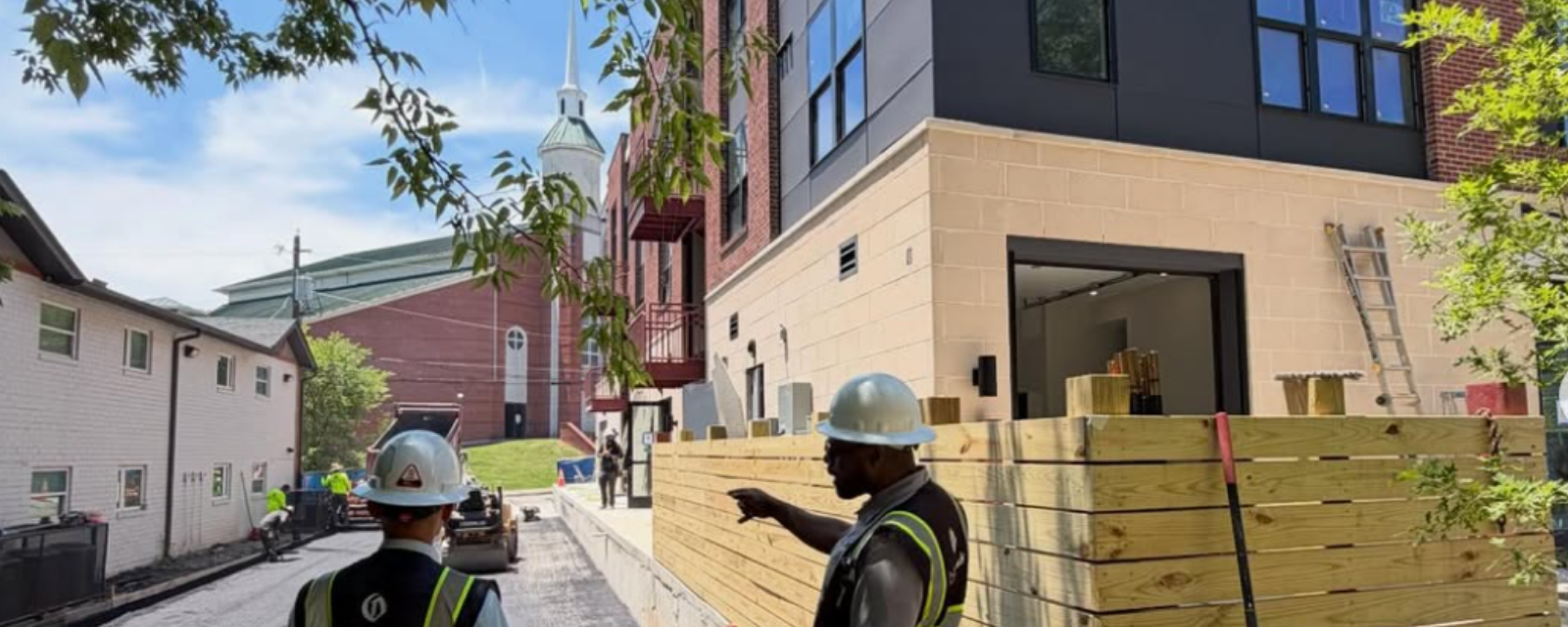
An abandoned house with a caved-in roof and missing siding used to sit at 880 North Avenue in English Avenue. Now it’s a modern multi-story mixed-use building with six affordable homes inside, and the only reason that transformation happened is because a stream buffer rule got rewritten at City Hall.
That’s the kind of detail that usually gets buried in a zoning footnote, but for English Avenue, it’s the whole story. A $3 million project that was, in the words of the headline, “dead in the water” got pulled back to life by one piece of legislation. And the ripple effects could matter for every underused lot in the neighborhood.
So what actually happened at 880 North Avenue?
OaksATL, a nonprofit community organization serving the Historic Westside, spent five years developing the site. According to SaportaReport, the project hit a wall that had nothing to do with funding or permits in the traditional sense. OaksATL tracked down the absentee owner in California, acquired the lot, designed the building, and submitted for permit. Then the city discovered the building footprint encroached about 10 feet into a 75-foot stream buffer. No variance was even available. The project stopped.
The before-and-after on display at the ribbon cutting, a literal easel with a photo of the gray, collapsing house next to the finished building, tells you how close this one came to never happening. Mayor Andre Dickens cut the ribbon on June 25, 2026. The project was funded by Invest Atlanta, the City of Atlanta, and the Westside Future Fund, with $600,000 coming from the Westside Tax Allocation District.
Why does a stream buffer rule make or break a building?
The real story isn't just "regulations blocked housing, regulations changed." It's that the city made an explicit tradeoff between two legitimate public goods, and English Avenue is the test case for whether that tradeoff was the right call.
District 3 Atlanta City Councilmember Byron Amos went to bat for the project by proposing a new city ordinance that reduced the stream buffer requirement from 75 feet to 50 feet for affordable housing developments. That 25-foot adjustment was the difference between a project that penciled out and one that didn’t.
If you’ve never had to think about stream buffers, here’s the short version: city code requires development to stay a certain distance back from streams and creeks. That’s a good thing for water quality and flood control. But in a neighborhood like English Avenue, where infrastructure issues and historic disinvestment already shrink what’s developable, a buffer that made sense on larger lots can effectively kill a parcel for housing. Especially affordable housing, where the margins are already razor thin and there’s no luxury markup to absorb the cost of a smaller footprint.
Amos said at the ribbon cutting: “We protected our environment, but we empowered our technical panel with the flexibility needed to approve smart, appropriate, multifamily developments right here in our community. We refused to let outdated regulations stand in our way of progress.”
That’s the regulatory tweak that unlocked 880 North Avenue. And it’s why a story that sounds like inside baseball is actually a neighborhood story.
Who lives here now, and what else is in the building?
The six two-bedroom units are priced for residents earning between 50 and 80 percent of the area median income, with monthly rents ranging from $1,239 to $1,614. OaksATL gives leasing preference to single-parent families and applicants with existing ties to English Avenue. Tenants begin moving in this month.
The ground floor has two retail storefronts renting at 70 percent of market rate, reserved for independent, local, and minority-owned or women-owned businesses that reflect and serve the English Avenue and Westside communities.
Why English Avenue specifically?
English Avenue has been on the receiving end of a lot of promises over the years, and not nearly enough delivery. A nonprofit developer pulling off a mixed-use affordable housing project here isn’t a small thing. It’s a proof of concept. If the rules can flex for one infill site, they can flex for the next one.
What’s the bigger pattern here?
We talk about Atlanta’s housing crisis like it’s about supply, or interest rates, or land costs. All true. But sometimes the thing standing between a vacant lot and new affordable homes is a single line of code in a city ordinance. One councilmember reading the room. One nonprofit willing to keep showing up to meetings while the deal hangs by a thread.
For more on how nonprofit developers are navigating these projects, our piece on what's happening at the "Pink Store" in Pittsburgh covers similar terrain.
880 North is six units. That’s not a lot. But the ordinance Byron Amos passed doesn’t just apply to this lot. It applies to every affordable housing project in the city that hits the same wall. The real win here isn’t the ribbon cutting, it’s the regulatory change underneath it. OaksATL and Amos essentially rewrote the conditions for what’s possible on small infill parcels near waterways across Atlanta. How many sites just became viable that weren’t last year? That’s the number worth tracking.


