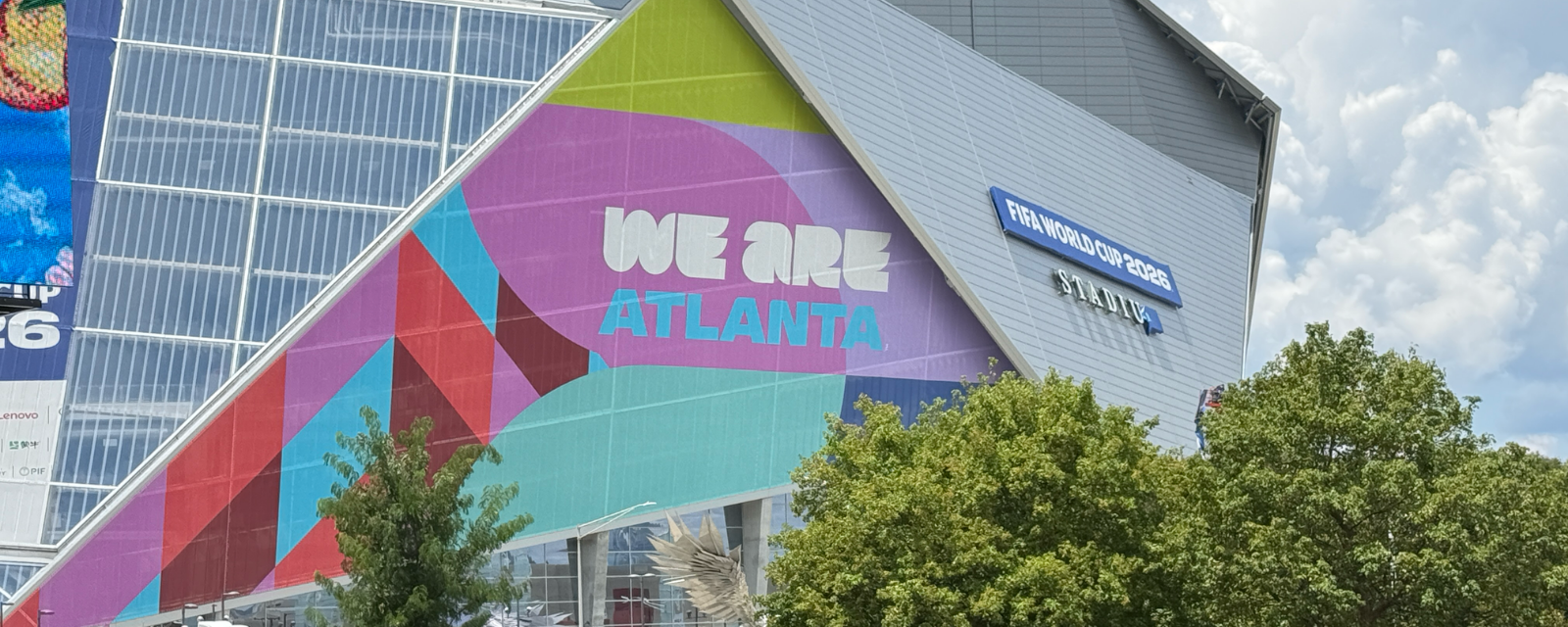
Last February, I sat in a Quarterly Business Breakfast hosted by Showcase Atlanta, the City of Atlanta, and the Atlanta Beltline. The room buzzed with projections: 3.5 billion global viewers. 532,000 visitors flooding Atlanta. Regional economic impact estimated between $500 million and $1 billion, according to the Metro Atlanta Chamber. Small business owners were told to get ready this was their World Cup moment.
Fast forward to now, and I'm still waiting for the actual numbers. I called the mayor's office this morning to ask when we'd see a revenue report on FIFA's true economic impact. The answer? Early 2027. Maybe. Based on how long people stayed in Atlanta after the matches wrapped. But here's the gap that's harder to ignore: Mayor Andre Dickens told Atlanta News First the city's budget for hosting was $52 million, and that Atlanta should "do better than break even." There's a significant difference between breaking even on $52 million and generating up to $1 billion in regional impact.
What Small Businesses Actually Experienced
We talked to three businesses near the Centennial Park District to see if the FIFA traffic matched the hype: Black Coffee, The Little Sober Bar, and BeKindATL. All three had different takes on whether the surge materialized and whether they felt supported by Showcase Atlanta and the city to capitalize on the moment. Some saw a bump. Others saw the crowds pass them by entirely, heading straight to the stadium or sticking to the fan festival zones without exploring the surrounding blocks.
The question isn't just whether Atlanta put on a good show for the world by most accounts, we did. It's whether the opportunity translated into meaningful economic gains for the businesses that were supposed to benefit. Funding already feels scarce for small businesses, and when projections like $500 million get thrown around, expectations shift. Business owners make hiring decisions, stock inventory, extend hours. If the reality doesn't match the forecast, that's not just a disappointment it's a financial hit.
The Numbers Don't Add Up Yet
Here's what we know for sure: 532,000 visitors were projected. The city spent $52 million. FIFA and the federal government covered portions of that cost. But until early 2027, we won't have clarity on how much revenue actually flowed through metro Atlanta, how many of those visitors stayed in local hotels versus passing through, or whether the regional economic impact hit even half of what the Chamber estimated.
This isn't unique to Atlanta. Cities hosting major sporting events often face inflated projections that don't materialize in post-event analysis. Tourism boards and chambers tend to estimate best-case scenarios without accounting for local businesses left out of the official event zones or infrastructure challenges that keep visitors concentrated in a few blocks.
What This Means for the Centennial Park District
The Centennial Park District got the global spotlight, no question. But attention doesn't always equal revenue. If you're a small business owner two blocks off the main event corridor, you might have seen foot traffic, or you might have watched thousands of people walk past your door on their way somewhere else. The district's business community now waits to see if the exposure translates into any long-term gains increased tourism, repeat visitors, or even just better city infrastructure as a result of hosting.
The city did invest in temporary improvements, signage, and public safety measures. Whether those stick around or disappear with the World Cup banners is another question we won't answer until next year.
Projections are easy to sell. Accountability is harder to track. I don't doubt that Atlanta put on a strong showing or that businesses near the stadium saw some benefit. But when the spread between estimated impact and actual city spending is this wide, and when the final accounting won't arrive until early 2027, it's fair to ask whether small businesses got the support they were promised or just the hype. The World Cup spotlight was real. The question is whether Atlanta's small business community got more than a glance.


