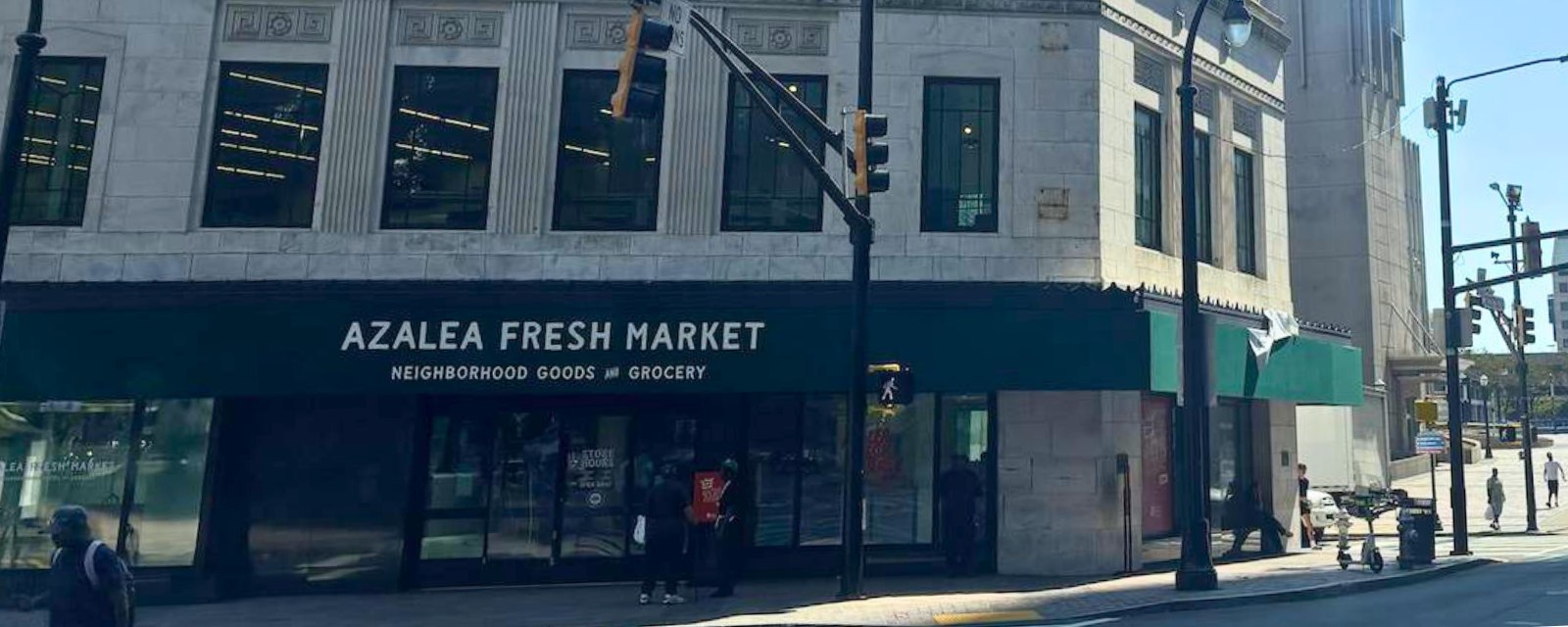
When Azalea Fresh Market opened inside downtown Atlanta's historic Olympia Building last August, there was one big question hanging over it: Would people actually use it?
Less than a year later, we have an answer.
The city-backed grocery concept has now welcomed more than 150,000 customers, a number officials say exceeded expectations and one that turns what started as an experiment into a measurable success story. For a city that has spent years trying to improve access to fresh food, those numbers are difficult to ignore.
Why 150,000 Customers Matters
More than 150,000 customers in less than a year means this is no longer a pilot project or an interesting idea on paper. It's a grocery store that people have incorporated into their routines, whether that's grabbing lunch, picking up dinner on the way home, or making a quick stop between classes.
That success also changes what comes next. A second Azalea Fresh Market is already planned for Campbellton Plaza in Southwest Atlanta, and the conversation is no longer about whether the concept can work. Now it's about whether it can be repeated.
What This Says About Downtown Atlanta
We've covered Azalea several times since it first opened because it felt like more than just another retail tenant moving into the Olympia Building.
Downtown has added apartments, hotels, entertainment, and students over the years, but everyday conveniences have been slower to arrive. Grocery stores are one of those amenities people rarely think about until they don't have one. Their presence changes how a place functions because they support the daily routines that make a neighborhood feel complete.
Looking at these numbers now, it feels like another sign that downtown Atlanta is continuing its transition from a business district into a place where people increasingly expect to live their everyday lives.
I remember when we first covered this story and a lot of the comments were skeptical. People questioned whether there would be enough foot traffic to support a grocery store downtown, whether theft would become a major issue, and whether the concept would even last. What makes this story interesting to me is that it challenged a lot of assumptions people had about downtown Atlanta. Sometimes the demand is already there; it just takes the right concept to reveal it.


