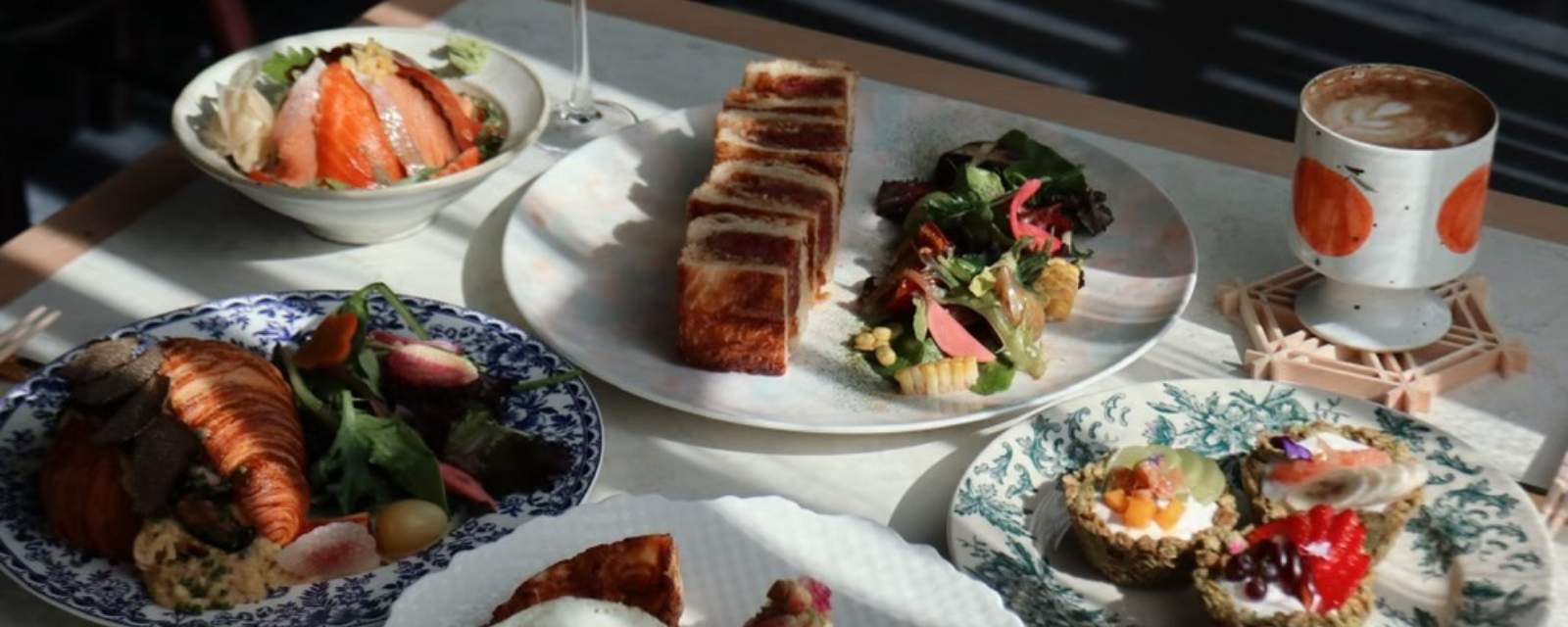
Brush Sushi just hit its 10-year mark in Buckhead, and chefs Jason Liang and ChingYao Wang aren't celebrating by resting on their Michelin star. Instead, they've built out the kind of menu that makes the case for showing up at noon on a Tuesday — or rolling through for brunch with friends who think omakase is out of their league.
The restaurant's Michelin-starred O by Brush omakase counter is still the marquee experience, but the broader dining room has evolved into something that feels less like a special occasion spot and more like a place that earns repeat visits. We're talking dry-aged fish, live tuna cuttings, a pastry-driven brunch program, and a beverage menu that includes creative nonalcoholic options alongside an ambitious sake selection.
What Makes This Different From Standard Omakase
The question everyone asks about omakase: why is it so expensive? The short answer is ingredient quality, technique, and the labor-intensive nature of sourcing and preparing fish daily. But here's what Brush figured out — not every meal has to be the $200 tasting menu to deliver that level of craft.
The spicy tuna roll alone is worth the trip, and their lunch service gives you access to the same kitchen turning out Michelin-level work without the omakase price tag. Dry-aged fish is still a relative rarity in Atlanta, and Brush has leaned into it as a signature move. The aging process concentrates flavor and changes texture in ways that make even familiar cuts feel new.
Liang and Wang have also built out a brunch program that leans on Wang's pastry background, which is the kind of detail that separates a restaurant coasting on reputation from one that's still iterating. Brunch sushi isn't exactly common in the city, and the fact that they're pulling it off speaks to the kitchen's range.
The Buckhead Dining Scene Context
Buckhead's dining landscape has changed dramatically in the past decade. When Brush opened in 2016, the neighborhood was known more for steakhouses and hotel restaurants than cutting-edge sushi. Now, it's home to multiple high-end Japanese concepts, and Brush helped create the appetite for that shift.
Similar to how Elise Restaurant brought art-forward dining to Midtown, Brush introduced Buckhead diners to the idea that omakase could be a regular part of the city's food culture, not just a once-a-year splurge. The fact that they've survived and expanded through a pandemic, rising costs, and increased competition says something about the loyalty they've built.
What the Beverage Program Adds
The sake program at Brush deserves its own conversation. Creative nonalcoholic drinks aren't just an afterthought here — they're part of a deliberate effort to make the experience work for everyone at the table. That's increasingly rare in high-end dining, where the assumption is still that serious meals require serious wine pairings.
Sake flights let you explore different styles without committing to a full bottle, and the staff actually knows how to talk through the differences without making you feel like you need a certification to order. It's the kind of detail that turns a single visit into a regular habit.
Does Brush Sushi Have a Michelin Star?
Yes. O by Brush, the intimate omakase counter behind the main dining room, earned a Michelin star and Chef Jason Liang has been nominated for a James Beard Award. That level of recognition is still uncommon in Atlanta's dining scene, even as the city's food reputation continues to grow nationally.
The distinction matters because it signals a level of consistency and technique that goes beyond just good sushi. Michelin inspectors return multiple times anonymously, and the star reflects sustained excellence, not a one-time impression.
What Brush has done over 10 years is more impressive than the Michelin star itself. They've figured out how to operate at the highest level without alienating the diners who just want excellent sushi for lunch. That's the move that keeps restaurants alive long-term in this city — building a base of regulars who don't need a special occasion to show up. Atlanta's dining scene rewards that kind of approach, and Brush has earned its place as a Buckhead anchor. The fact that they're still evolving the menu a decade in tells me they're not done yet.


