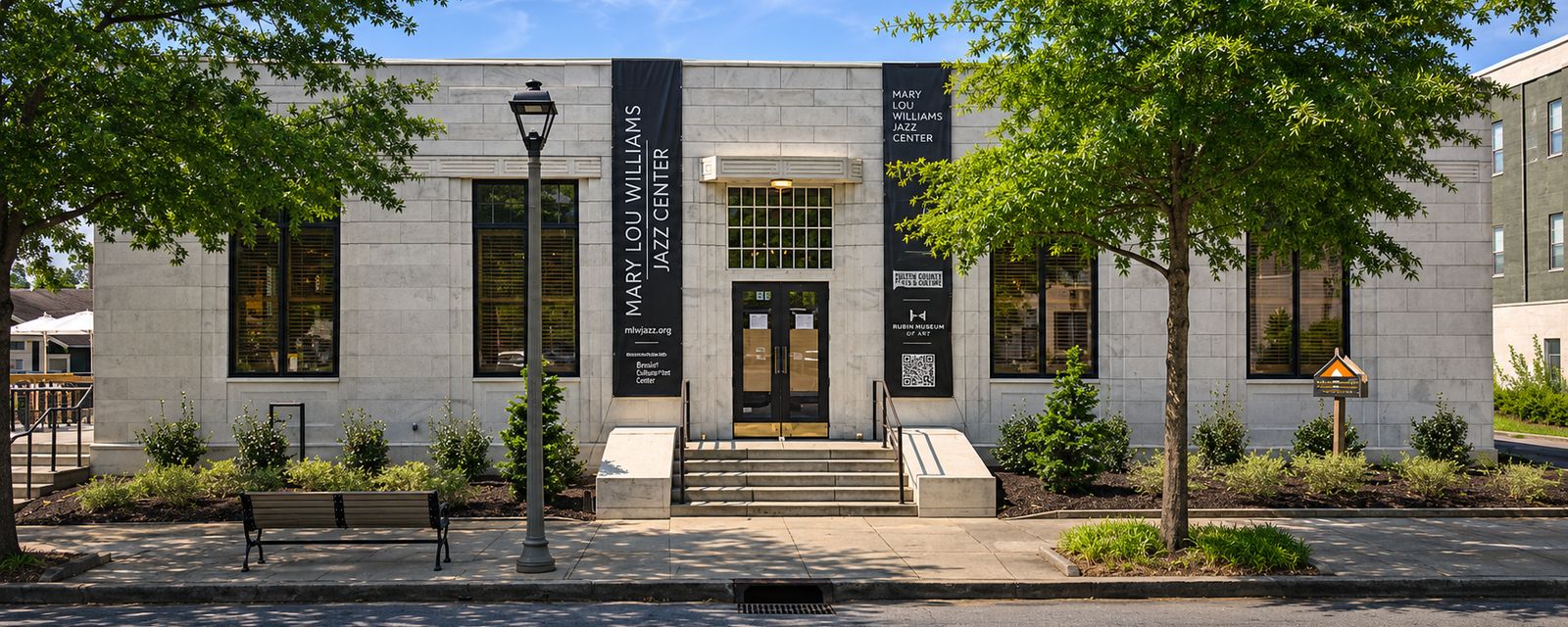
Churchill Grounds has reopened at 141 E. Trinity Place in downtown Decatur, bringing live jazz seven nights a week to a former post office. Its 10-day grand-opening celebration runs Nov. 27 through Dec. 6, following soft-opening performances this fall.
The roughly 140-seat club anchors the Mary Lou Williams Jazz Center, where Cuban dining, instrument sales and repairs, and music education share the 1935 building. For neighbors, that means a place for a lesson as well as an evening performance. For anyone following how older buildings get another life, the ownership is worth understanding: more than 200 investors backed the project.
A listening room with a familiar name
Churchill Grounds occupies the rear of the art deco building, with seating across the main floor and mezzanine. Its calendar includes local, regional and touring performers, plus jam sessions.
The grand-opening lineup starts with drummer Terreon “Tank” Gully and TANKTIFIED, joined by special guest Stefon Harris, on Nov. 27 and 28. Tia Fuller, featuring Lil John Roberts, follows Nov. 29. Tickets and the complete calendar are available at churchillgroundsjazz.com.
The club welcomes all ages, recommends advance tickets and requires a $10 food-and-drink minimum per person. Parking on site is limited, with reservable spaces offered online. Decatur MARTA station is about a five-minute walk away.
The original Churchill Grounds operated beside the Fox Theatre for 19 years before closing in 2016. Former co-owner Sam Yi kept the name alive through pop-ups and was planning an East Atlanta club when he died in February 2025. Atlanta Magazine reports that his partner, Tyler West, and saxophonist Will Scruggs joined forces that September with support from Yi’s family.
More than an evening destination
At street level, Clave by Mojitos is open and provides food and drinks inside the Churchill Grounds showroom. The restaurant’s dining room retains the original post office floors.
Downstairs, Scruggs Woodwinds sells and repairs instruments and operates a jazz academy. Its six classrooms can also serve as recording booths. The center takes its name from Atlanta-born pianist, composer and arranger Mary Lou Williams.
I see the practical appeal in that mix: music education and instrument care give residents reasons to use the building beyond a night out. Those are operating businesses, not simply amenities promised for a later phase.
Koolbonga Studios needs a separate qualification. Its control room sits above the main floor and connects to the club’s stage and lower-level recording rooms. But the center’s website still labels the studio “coming soon.” The recording infrastructure is there; public opening and booking availability remain unclear.
How the shared building works
Scruggs founded and manages Cornerstone Jazz Collective, which bought the property in August 2024 and developed the center. He is also behind Scruggs Woodwinds, one of its revenue-sharing businesses. The model is designed around dining, education, retail, performances and recording supporting one another.
Acquisition and construction financing was reported through Tandem Bank at a 50/50 debt-to-equity ratio. The Decatur Downtown Development Authority also supported applications for two possible below-market loans: up to $200,000 through the Georgia Cities Foundation and up to $250,000 through a state revolving-loan program.
The public minutes reviewed do not establish which loan ultimately closed. The DDA acts as a conduit without repayment responsibility and separately approved a $10,000 exterior-signage grant. The center opened in fall 2026, later than its original end-of-2025 target.
I like that this reuse gives the building several jobs rather than depending entirely on ticket sales. Lessons, repairs, meals and performances create different reasons to return. That does not establish the model’s financial success, but it gives residents concrete ways to participate in what more than 200 investors helped bring into use.


