Georgia is about to build its largest state psychiatric hospital in decades, and the price tag is $409 million for a 300-bed forensic facility. This is a real reversal for a state that spent the last 16 years moving away from institutional psychiatric care. In 1999, the U.S. Supreme Court ruled in Olmstead v. L.C. that unnecessarily institutionalizing people with mental disabilities violates the Americans with Disabilities Act. That ruling led to a 2010 federal settlement between Georgia and the U.S. Department of Justice requiring the state to build out community-based mental health services. The 16-year effort that followed is what makes this new hospital announcement complicated.
More than 700 Georgians in the criminal justice system are currently waiting for a spot in a state psychiatric facility. That is the backlog driving this build. Kevin Tanner, commissioner of the Department of Behavioral Health and Developmental Disabilities, put that number on the record, and it is the kind of figure that forces a policy shift whether the state wanted one or not.
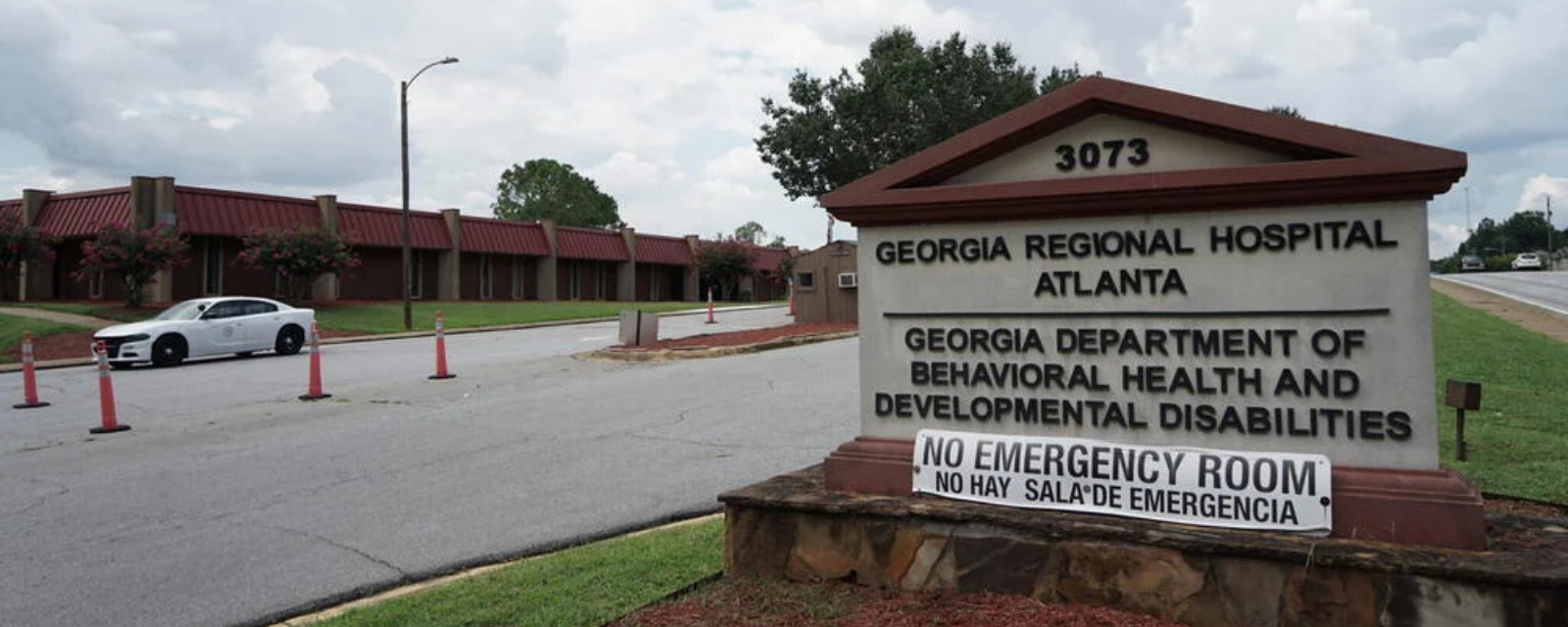
The new hospital will be built near Georgia Regional Hospital in south DeKalb County. That location is not incidental. Georgia Regional Hospital is the same institution where the original Olmstead plaintiffs were unlawfully held in 1999. The hospital that forced Georgia away from institutionalization sits adjacent to where the state is now building its biggest psychiatric facility in decades.
Wait, didn't Georgia just spend 16 years moving away from this?
Yes, and that is the tension worth sitting with. After the Olmstead settlement, the state pivoted toward community-based care, the idea being that people with mental illness do better outside institutional walls. Now Georgia is building the biggest state hospital in decades. Both things can be true at once: community care is still the goal, and the criminal justice backlog has grown into a crisis the current system cannot absorb. Whether $409 million spent on a forensic facility crowds out future investment in community mental health is the fight that is coming.
There is also a separate legal development running alongside the hospital. In April 2026, the state reached an agreement with the Georgia Advocacy Office and the Southern Center for Human Rights requiring forensic patients to be evaluated within 30 days and admitted to an appropriate program within another 30 days. That agreement expires in late 2029. It is the clearest deadline Georgia has been given on the backlog, and the hospital is part of how the state intends to meet it.
If you want a sense of how big-ticket state decisions ripple into everyday Atlanta life, we have been tracking a lot of that lately, one example being Fulton County's $1 trillion reparations report. State-level policy decisions do not stay abstract for long.
What happens to county jails in the meantime?
Until beds exist, people wait. County jails become de facto psychiatric holding facilities, which is bad for the people inside and expensive for the counties running them. Putnam County Sheriff Howard Sills, who has been in the role for nearly 30 years, has said publicly that he believes holding mentally ill people who have been deemed unfit to stand trial in a penal institution may be unconstitutional. One inmate in his county spent over a year in a cell waiting for a state hospital bed. A 300-bed forensic hospital is significant, but 300 beds against a 700-plus waitlist is not a solution on its own. It is a start.
Is the hospital the only thing being built?
No, and that matters. Alongside the $409 million forensic hospital, DBHDD has smaller behavioral health crisis centers in the works in Augusta, Savannah, Dublin, north Fulton County, and Clayton County. These typically cap at around 30 beds and are designed for short-term care. For Atlanta residents, the north Fulton and Clayton locations are the ones to watch. The commission is trying to build both a large forensic anchor and a distributed community network at the same time. Whether the funding holds for both is the open question.
Is there a place that permanently houses mentally ill people in Georgia?
Georgia already operates state psychiatric hospitals and contracts with community-based residential programs across the state, but the forensic side, meaning people whose cases run through the courts, has been chronically under-resourced. That is exactly the gap this new facility is meant to fill. It is not replacing community care. It is meant to relieve the pressure point where the criminal justice system and mental health care collide.
Photo Credit:Alander Rocha/Georgia Recorder
700 people waiting in jail cells for psychiatric care is a moral emergency the state cannot keep punting on. Building this hospital is the right call. The real test is whether Georgia treats this as the ceiling of its mental health investment or the floor. If lawmakers use this hospital as an excuse to slow-walk community care funding, we will be right back here in another decade. Build the beds. Then fund the neighborhoods. Both, not one.


