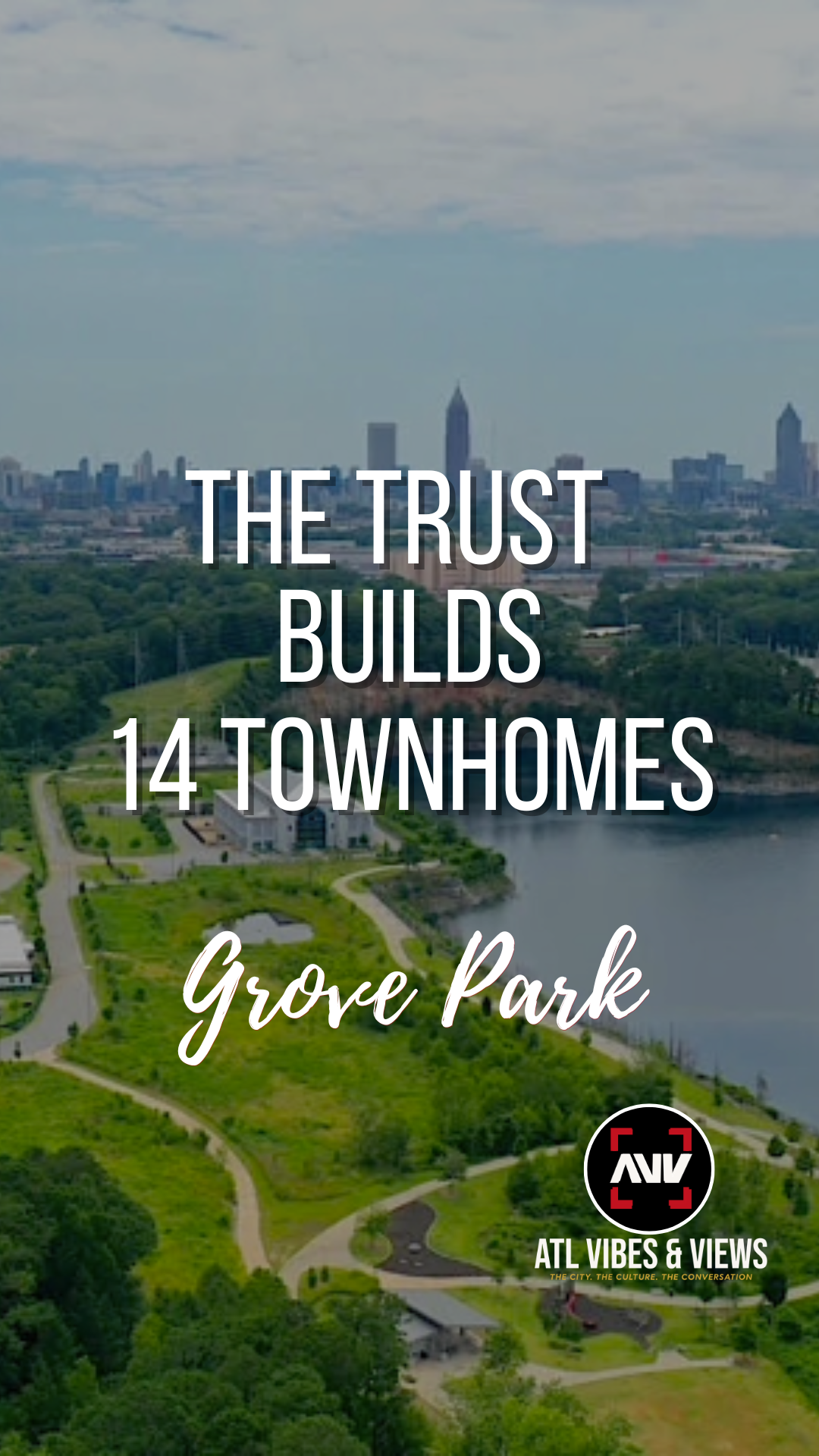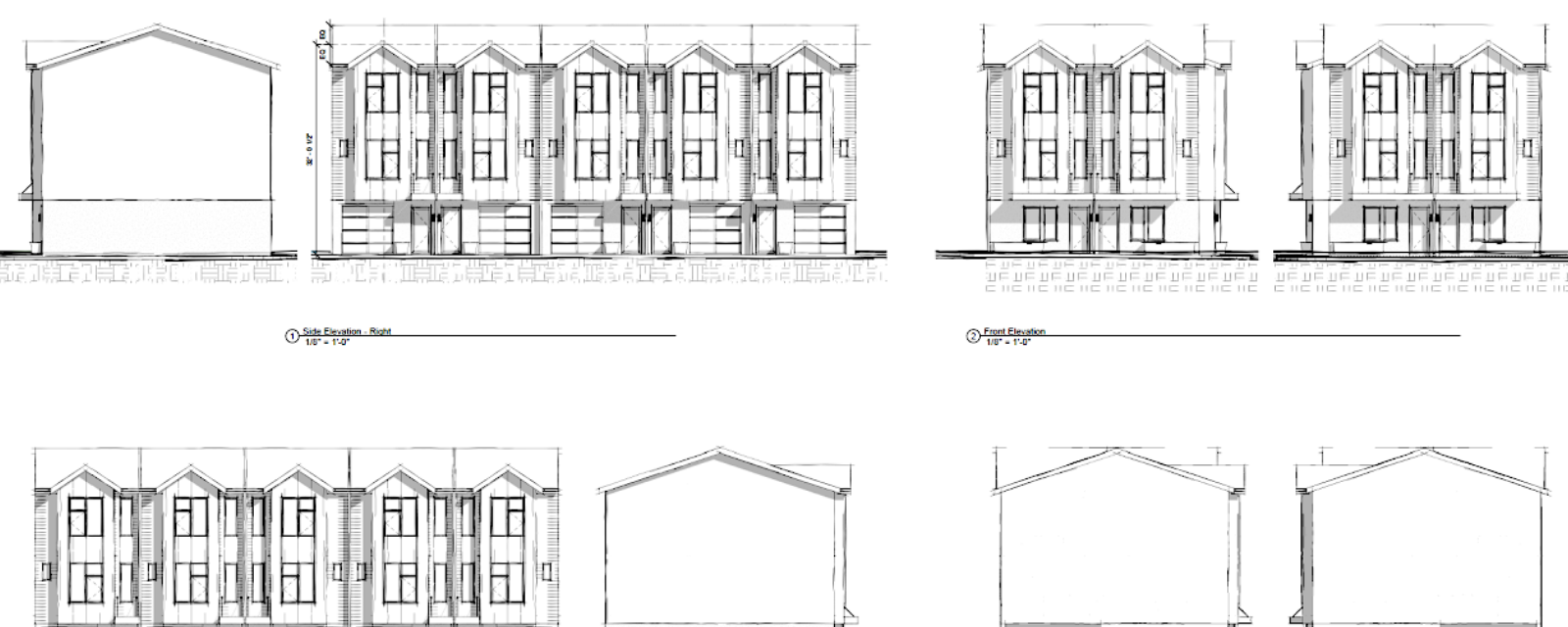
Atlanta has a growing affordability crisis and this is especially true when it comes to housing. It's a tough puzzle to solve. However, Dream Home Today is committed to finding a permanent solution starting with a cluster of 14 new constructing 2-bedroom townhomes starting around $250,000. These homes are designed to stay affordable forever. Not for a decade. Not until the next owner. Permanently. That is the whole point of The Trust at Grove Park, a community land trust project wrapping up construction this summer just blocks from Shirley Clarke Franklin Park, Atlanta’s largest green space.
According to Michael Oden, founder and managing broker of Dream Home Today, the 14-unit development at 885 N. Eugenia Place is on track to deliver in June or July of this year. A partnership between the Atlanta Land Trust and 3384 Residential, these are owner-occupied townhomes reserved for households earning less than 80 percent of the area median income, and the affordability restriction travels with the property forever through the community land trust model.
How the Community Land Trust Model Actually Works
Here is the part people always ask about: how does a $250,000 townhome near one of the city’s most-visited parks stay affordable when the market around it heats up? The answer is in the land itself. In a community land trust, the homeowner buys the structure, the townhome, but leases the land beneath it from a nonprofit trust. That keeps the initial purchase price lower and limits how much the home can appreciate when it is resold, ensuring the next buyer also qualifies under income restrictions.
It is a model Atlanta has increasingly turned to as housing costs outpace wages across the metro. The tradeoff is clear: you build less equity than you would in a traditional home purchase, but you get into homeownership in a neighborhood where market-rate townhomes would easily clear $400,000 or more. For first-time buyers who have been priced out of the Westside, that is not a compromise. That is an entry point.
Grove Park's Transformation Is Already Underway
This project does not exist in a vacuum. Grove Park sits directly adjacent to Shirley Clarke Franklin Park, a 280-acre former quarry turned greenspace that opened in 2021 and instantly became a magnet for families, runners, and weekend crowds. You may know it by its former name, Westside Park. The Atlanta City Council officially renamed it in February 2025 to honor former Mayor Shirley Franklin, the first Black woman to serve as mayor of a major city in the modern South.
The neighborhood has seen scattered investment since the park opened, but nothing at this scale targeting permanent affordability. The Trust at Grove Park is filling in the site of a long-vacant property, bringing new residents into a historically underinvested corner of the city that is finally getting the kind of attention it has deserved for years.
What makes this different from the usual affordable housing conversation is the location. Grove Park is not on the outskirts. It is not tucked into a forgotten corner far from transit or parks. It is walking distance to one of the best outdoor spaces in the entire metro, and now it is getting housing that working families can actually afford to buy. That combination — prime location plus permanent affordability — is rare enough in Atlanta that it is worth paying close attention to.f
Why Mid-$200Ks Matters Right Now
The median home price in Atlanta proper is hovering around $425,000 as of early 2026, and new construction townhomes in desirable in town neighborhoods routinely hit $500,000 or more. Against that backdrop, a brand-new townhome starting around $250,000 is not just affordable. It is a completely different market tier.
For context, a household earning 80 percent of Atlanta’s area median income — the upper limit for eligibility here — would be making roughly $91,000 for a family of four in 2026. That is teachers, nurses, city workers, service industry managers. People who work in Atlanta every day but have been systematically priced out of owning here. The Trust at Grove Park is explicitly designed for them, and the community land trust structure ensures it stays that way even as the neighborhood continues to change.
This is the kind of development that proves affordability and quality don't have to be opposites. Grove Park is getting new housing that looks good, sits in a prime location, and stays accessible to the people who actually need it. The community land trust model isn't perfect — you're trading full equity for access — but it's one of the few tools we have that actually works long-term. If we want a city where teachers and nurses can afford to live in the neighborhoods they serve, we need more projects like this, not fewer. The Trust at Grove Park isn't solving Atlanta's housing crisis alone, but it's showing us what's possible when affordability is built into the bones of a project from day one.