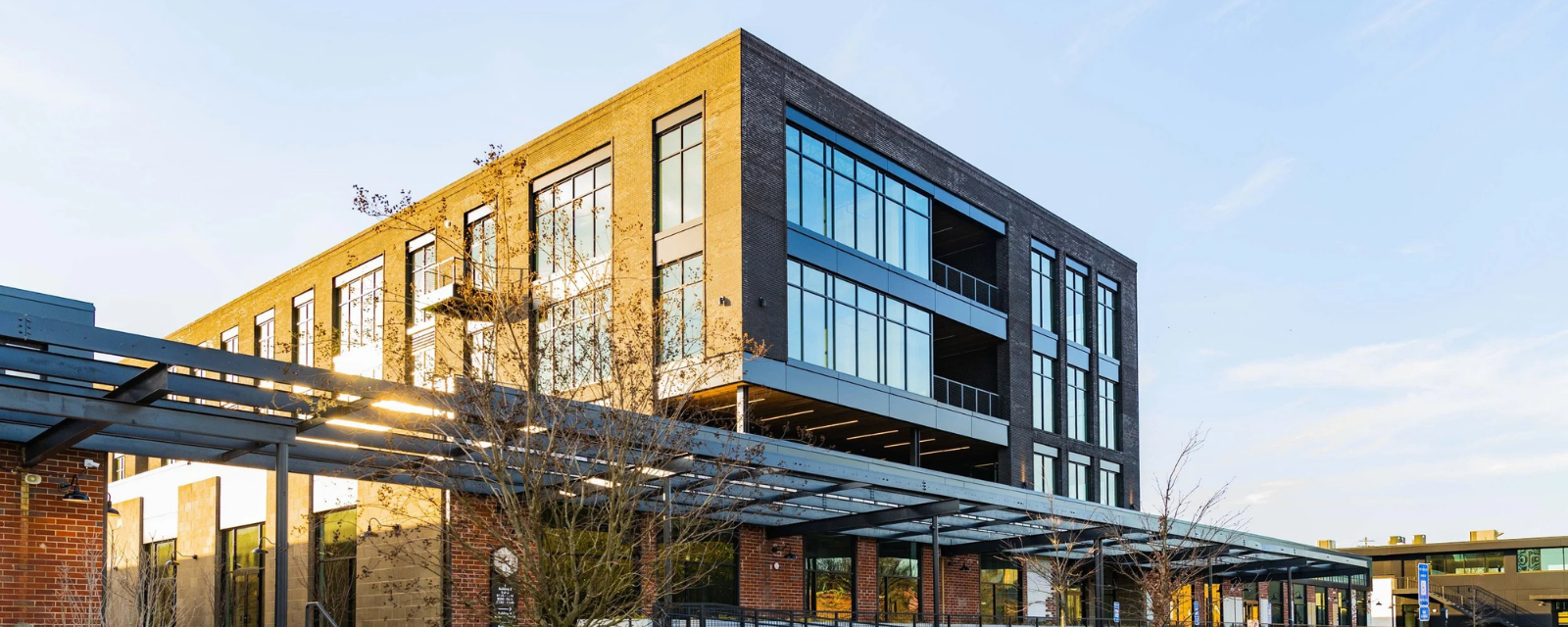
Westside Paper just pulled off the kind of comeback that should make every adaptive-reuse skeptic in west Atlanta sit up straight. A couple of years ago, this 70-year-old warehouse remake was a ghost town. Beautiful upscale offices, a killer retail lineup with Pancake Social, Dumpling Factory, and King of Pops, a trendy West Midtown location, and somehow not a single office lease signed in the year after debut. Zero. Now? It's nearing 80% leased-out status.
What changed is the whole point of this story, and it's the kind of pivot that other stalled developments around Atlanta should be studying right now.
The pivot that saved the project
Ownership stopped chasing traditional office tenants. That's the headline. When the post-pandemic office market refused to cooperate, they reframed the building for the users who actually wanted space like this, wellness operators and showroom-style tenants who needed character, not cubicles. And the leases started rolling.
According to Urbanize Atlanta, the latest wave includes Packsize at 33,000 square feet, a sustainable packaging automation company. Disguise, a tech firm that powers major live experiences worldwide, took 10,000 square feet. Luxe Redux Bridal grabbed 3,000 square feet as a specialty retailer entering the submarket. Construction Resources rounds out the new arrivals.
I'll be honest, when I first heard "warehouse adaptive reuse near the Beltline," my eyes glazed over because we have heard that pitch a hundred times. But the numbers here are the story. Going from zero office leases in year one to nearly fully leased is not a vibes win. That's an actual repositioning that worked.
Why does adaptive reuse keep struggling in Atlanta?
This is the question I get asked the most, and Westside Paper basically just answered it. The buildings themselves are not the problem. The problem is when developers underwrite a 1950s warehouse to 2019 office demand and then act surprised when nobody signs. The post-pandemic tenant looks different. Wellness studios, showrooms, experiential brands, and tech firms that need flexible footprints are the ones writing checks. Traditional white-collar office is not coming to save these projects.
It's the same lesson playing out in other corners of the city, like what we covered with the Atlanta Civic Center redevelopment and the South Downtown Terminal District. The projects that move are the ones that read the market as it actually is, not as it was.
What this means for the neighborhood
More signed leases means more foot traffic for the existing retail, which is the part residents actually feel day-to-day. Pancake Social does not care about your cap rate. It cares about how many people are walking through that courtyard at lunch on a Tuesday. Now there will be a lot more of them.
Westside Paper is the blueprint. Every stalled adaptive-reuse project in this city should be on the phone with this ownership group asking how they made the pivot. The pandemic did not kill cool old buildings. It killed lazy assumptions about who would lease them. Wellness, showroom, and experiential tenants are not a consolation prize, they are the actual market now, and the developers who figure that out first are going to clean up. This one's a win, and it's the start of a pattern, not an exception.


