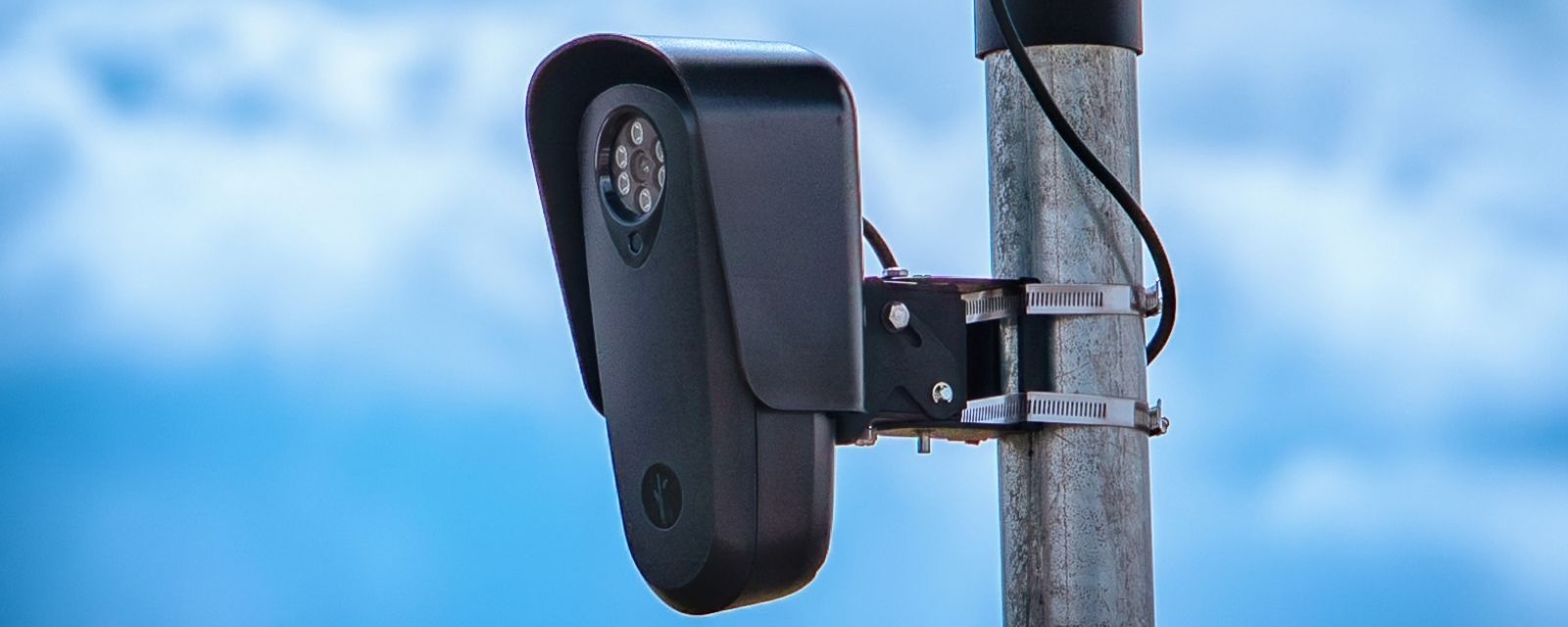
APD tightened its internal policy after 79 searches were flagged, but City Council has not yet codified those safeguards.
Atlanta police ran 115,578 searches through Flock’s license-plate-reader system this year.
That is not the number of times one person’s plate was photographed. It is not the total number of plates the cameras captured. It is the number of search inquiries the Atlanta Police Department reviewed in an audit ordered by Mayor Andre Dickens.
That distinction matters because Flock is one part of a much larger surveillance system. Atlanta’s Operation Shield began with 17 Downtown cameras in 2007. The ACLU of Georgia now says more than 60,000 public and private cameras are connected to local law enforcement across the city. Those are not all license-plate readers.
The rules governing the Flock searches include Georgia law and Atlanta Police Department policy. What Atlanta does not yet have is a city ordinance making the department’s additional safeguards permanent across city government.
What happened at City Council
On Sept. 21, the Atlanta City Council sent Mayor Dickens’ proposed surveillance ordinance to the Public Safety and Legal Administration Committee for more discussion.
It was not adopted, and no date was announced for another vote.
Dickens had announced the legislation on Sept. 15 as a way to codify and strengthen Atlanta’s existing standards for license-plate readers and other public-safety cameras. The proposal would clarify who may access the systems, what searches are permitted, how information may be collected and shared, and how the city audits their use.
“Technology that gives government extraordinary capabilities must come with extraordinary accountability,” Dickens said. “Public safety is not a blank check, and neither is privacy an excuse to deny law enforcement tools that can help save lives and solve crimes.”
The administration requested a work session and public hearing and set a goal of gaining full council approval within 60 days of introducing the legislation. Returning it to committee gives council members time to question, revise or expand it.
It also starts the clock on whether those promised public discussions actually get scheduled.
What changes for drivers now
Nothing has changed legally because of the Sept. 21 meeting.
Georgia law already restricts how law enforcement agencies collect, retain, share and use automated license-plate data. APD also has an internal policy governing access, approved searches and oversight.
The proposed ordinance is about durability.
A department policy can be revised internally. A city ordinance generally requires public legislation and a council vote to change. The question is not whether rules exist today. It is how easily Atlanta could change its additional safeguards under a future police chief or mayor.
There is another distinction worth knowing if your neighborhood association, apartment complex or business participates in Connect Atlanta. According to the program’s official registration page, registering a camera only tells investigators that footage may exist. It does not automatically provide APD with a live stream.
Full camera integration is different. When asking whether a private camera is “connected” to police, ask whether it is simply registered or directly integrated.
Why 79 searches are under review
In August, Dickens ordered APD, the Department of Law and the Office of the Chief Operating Officer to conduct a 30-day review of the city’s use of automated license-plate readers.
The audit examined 115,578 searches conducted through Flock this year. Officials said 99.93 percent complied with department policy and training requirements. Investigators flagged 79 searches, approximately 0.07 percent, for further review.
A flagged search is not a confirmed violation.
Police Chief Darin Schierbaum said the internal investigation should be completed within 60 days. Any disciplinary or administrative action would come after investigators determine why the searches were made.
APD also revised its license-plate-reader policy before the ordinance reached council. The department strengthened access controls, clarified prohibited searches and possible penalties, disabled accounts associated with retired reserve officers, and established monthly compliance audits and refresher training.
The city ordered an audit, published the number of searches under investigation and tightened its internal rules. Those are meaningful actions.
They are still department actions rather than requirements written into Atlanta law.
A broader proposal arrived the same day
A separate surveillance proposal was introduced on Sept. 21 by Council member Kelsea Bond and a coalition that includes the ACLU of Georgia.
The Community Control Over Police Surveillance proposal would establish a broader public-review process for surveillance technology used by the city. As Atlanta News First reported, the draft sorts technology into three levels based on risk.
The highest category would cover systems capable of tracking, profiling or biometric identification. Those systems could require an impact report, written use policy, public notice, a hearing and formal council approval before deployment. The proposal would also create a seven-member Surveillance Technology Review Panel and restrict vendors from selling or monetizing city surveillance data for their own purposes.
The two proposals should not be collapsed into one.
The mayor’s ordinance is primarily about putting current operating safeguards into city law. The Community Control Over Police Surveillance proposal would create a wider approval and public-oversight system for surveillance technology before and after the city deploys it.
The Sept. 21 referral was not a defeat for either side. It exposed the deadline.APD expects to finish reviewing the 79 flagged searches within 60 days. The mayor wants permanent legislation approved within roughly the same window. The useful signal now is whether the Public Safety Committee schedules the promised work session and public hearing. A committee referral with dates attached is a process. A referral without them is a shelf.Have you ever asked your neighborhood association or business group whether its cameras are linked to police through Connect Atlanta, and did you get a straight answer?


