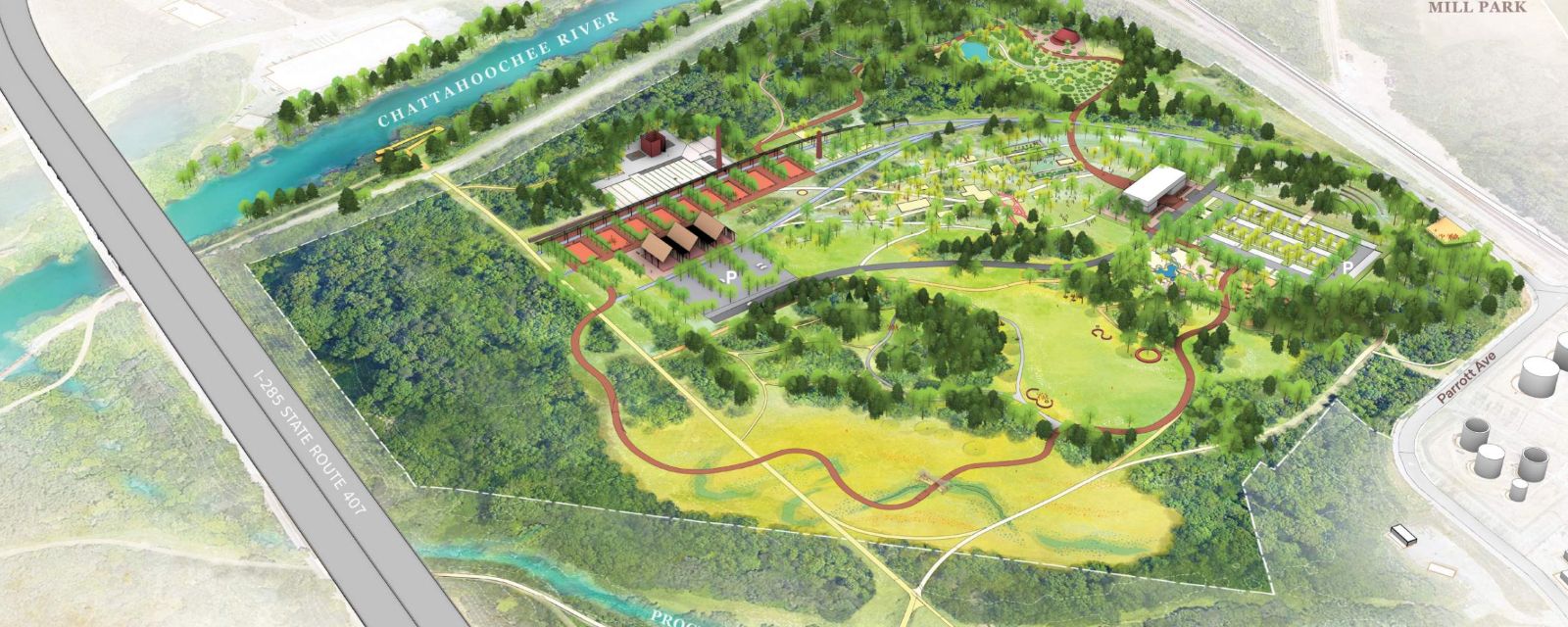
Atlanta has unveiled its preferred concept for transforming the former Chattahoochee Brick Company property into a memorial, community park and public entrance to the Chattahoochee River.
Presented Oct. 3, the plan gives residents their first complete look at what could replace the fence around the 75-acre site off Brick Plant Road. The Chattahoochee RiverLands project page lists 2031 as the projected completion for Phase 1.
That is a target, not a construction schedule. The city has not identified what Phase 1 includes, published a total project cost or announced when construction will begin. The property remains closed.
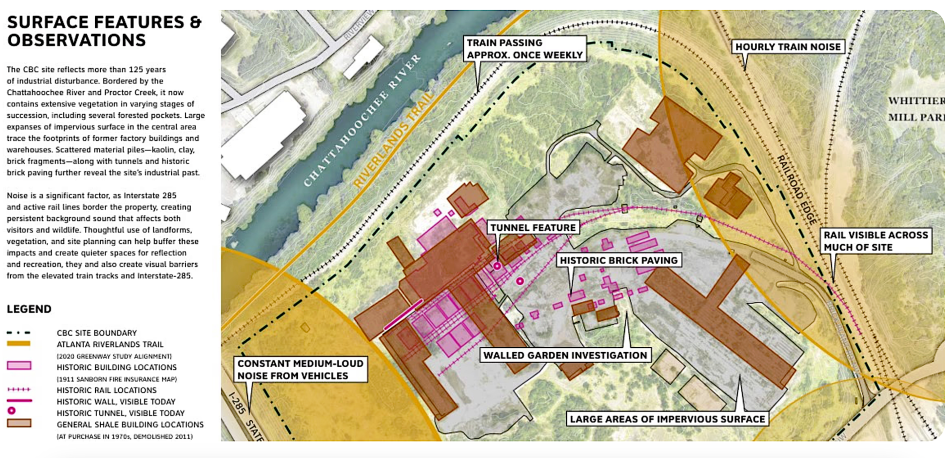
The bricks that helped build Atlanta came from forced labor
This is not simply an abandoned factory site. It is where Atlanta’s physical growth, political power and forced Black labor intersected.
The Chattahoochee Brick Company opened along the river in 1878. Former Confederate officer and Atlanta mayor James W. English founded it with William Lowe and became its majority shareholder in 1886. English also served as police commissioner, tying the company to the civic leadership of the city whose streets, sewers and buildings its bricks helped construct.
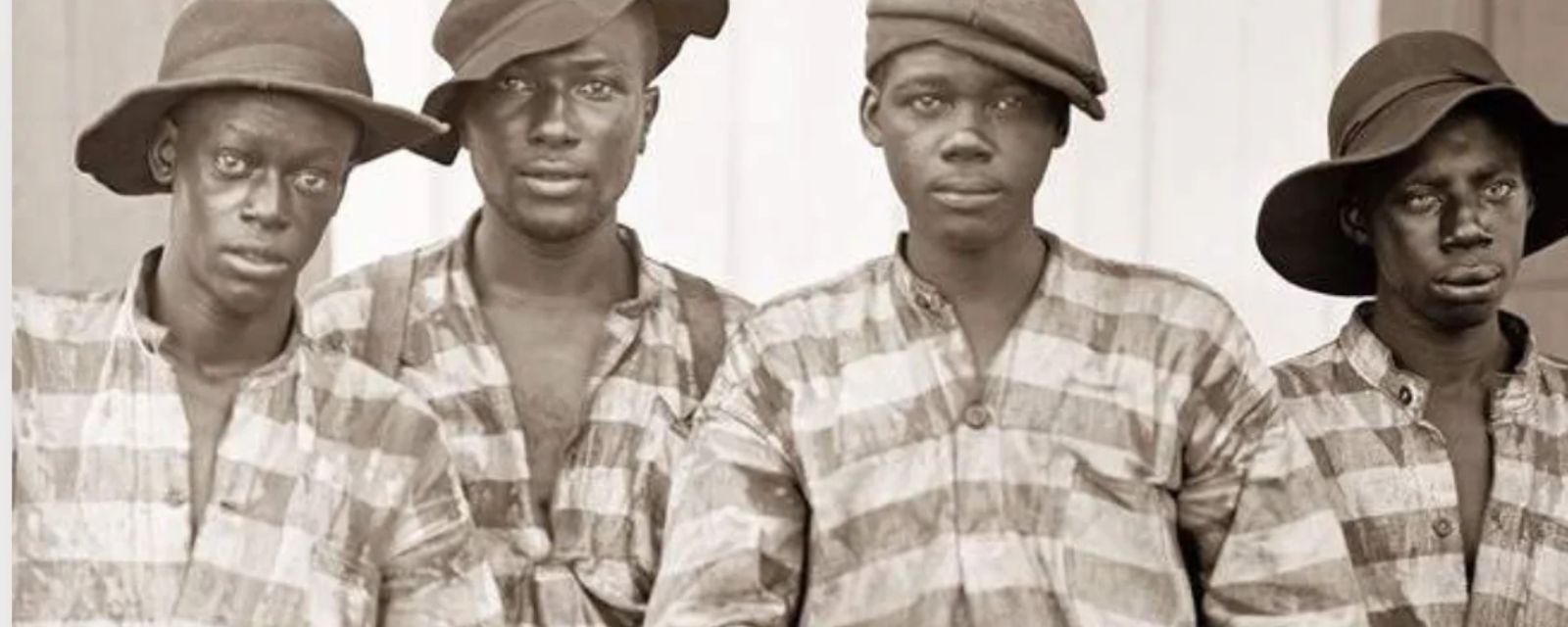
Georgia’s convict-leasing system allowed the state to lease incarcerated people to private businesses. Laws criminalizing minor conduct and vagrancy disproportionately pulled Black Georgians into that system. By the early 1890s, roughly 150 leased prisoners, primarily Black men and women, worked at Chattahoochee Brick.
They dug clay from the riverbank, molded it, carried heavy bricks to extremely hot kilns and loaded the finished product onto railroad cars. The factory produced more than 200,000 bricks a day, making it Georgia’s largest brick manufacturer.
A 1908 state investigation found 178 incarcerated workers at the camp and documented night and Sunday labor, dangerous kiln work, inadequate food and filthy living conditions. People died there, but surviving records do not establish where all of their remains were placed.
English accumulated substantial wealth through the system. Profits helped him establish Atlanta Fourth National Bank, which later became part of First National Bank of Atlanta.
Georgia abolished convict leasing in 1908, effective in 1909. Production fell sharply after the company shifted to paid labor, but the plant continued operating until 1972. General Shale later ran it until 2010 and demolished the remaining buildings in 2011.
Journalist Douglas A. Blackmon brought renewed attention to the property through his Pulitzer Prize-winning book, Slavery by Another Name. Preservation advocates later fought proposed industrial uses, and the Conservation Fund acquired the land for Atlanta in 2022.
How the design tells that history
The preferred concept organizes the property as a journey rather than placing its history on one marker.
A proposed two-story, 17,000-square-foot interpretive center would include exhibition space, a study room, an artist studio or cafe and an auditorium for approximately 100 people.
From there, visitors would pass through the former dwellings and brick yard. Gardens, gravel and reused brick would trace barracks and other structures that no longer stand. The design uses the average of 175 people forced to work there each day as part of that interpretation.
A forest memorial would provide space for remembrance and ritual. At the former factory, kiln footprints would become outdoor rooms and shade structures. A monument would represent the approximately 200,000 bricks produced daily.
The plan also includes a meadow, open lawn, shaded groves, picnic areas, nature play, public art and seasonal water features. Paths would connect the property with Proctor Creek, a near-term Atlanta RiverLands route and a longer-term riverfront alignment.
Archaeology and cleanup remain unfinished
The location of any burial ground remains unresolved. Archaeologists initially reported that they had not located human remains. Later ground penetrating radar work identified soil disturbances described as consistent with possible shallow graves, but that does not confirm burials.
The concept includes a forest memorial without identifying it as a verified cemetery. Additional archaeological findings could still affect later design work.
The property is also a brownfield. Atlanta says approximately 3,800 cubic yards, or 5,700 tons, of soil affected by lead and other industrial pollutants must be removed.
A $2 million federal grant is paying for remediation. The city’s cleanup page anticipated completion by the end of 2026, while the grant allows work through Sept. 30, 2027. AVV had not found confirmation of completed cleanup as of Nov. 20.
The strongest part of this plan is that it shows how Atlanta was built and who paid the human cost. The barrack footprints, worker count, kiln spaces and brick monument make the labor visible instead of reducing it to a plaque. But the next useful document is a phased implementation plan. If everything cannot open together, residents need to know whether the 2031 target delivers the memorial, river access, community park or only one part of that promise.


