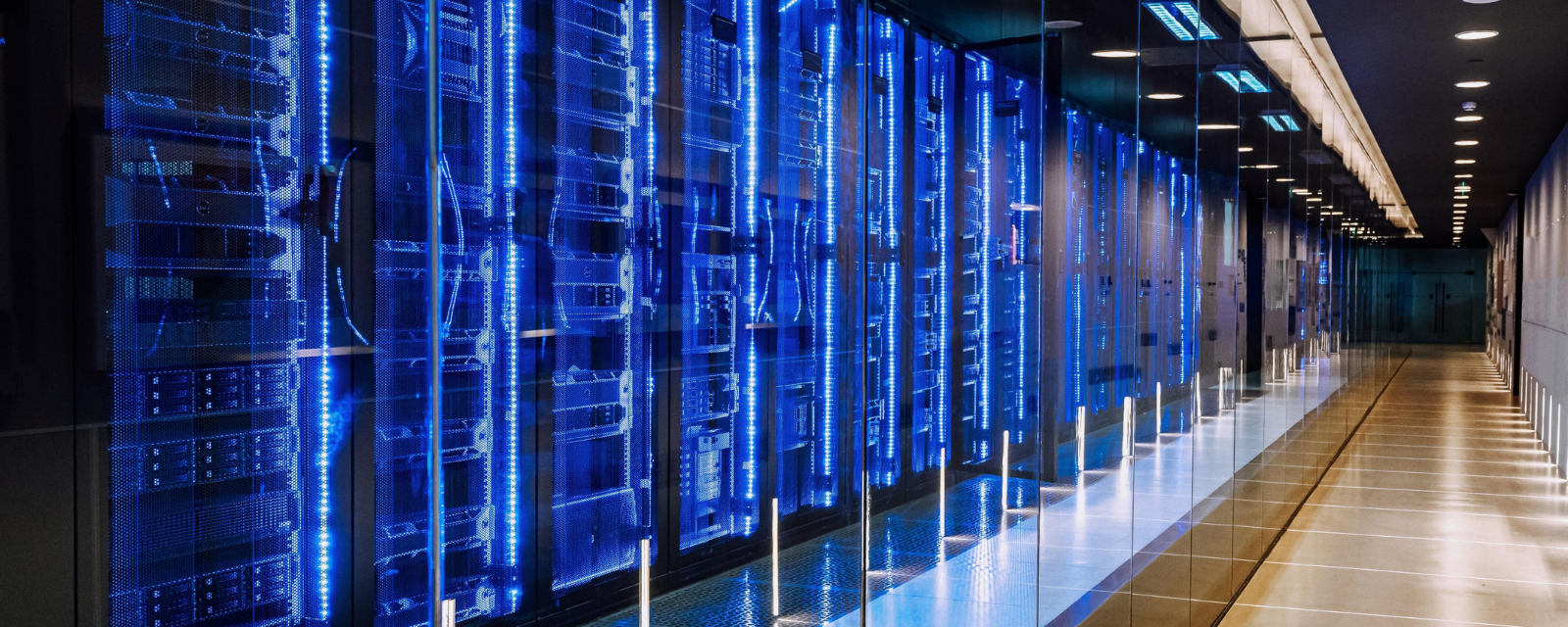
Data centers, those windowless warehouses full of servers that keep your Instagram scrolling and your ChatGPT answering, have quietly become the most bipartisan boogeyman in America. And Atlanta is sitting right in the middle of the boom.
According to Data Center Map, the US has more than 4,500 data centers with Georgia having more than 200 completed facilities and 98 more in the pipeline. What started as a niche infrastructure story has turned into a full-blown neighborhood fight from coast to coast, and metro Atlanta has become one of the hottest markets in the country for these facilities. The concerns showing up in city council meetings from Virginia to California are the exact same ones bubbling up here: strained electricity grids, depleted water supplies, citizens having to foot the bill for increased utility costs and a low, constant hum that neighbors say they can hear in their bedrooms.
What exactly is a data center, and why should you care?
A data center is a facility packed with computers and networking equipment that keeps the internet, cloud services, apps, and AI running. Every time you ask an AI to write your cover letter, a server (or computer) somewhere is spinning up, pulling power, and generating heat that has to be cooled, often with a lot of water. A harsh truth is that using water might be the most cost effective way of cooling these centers but it's not the ONLY way to get the job done properly.
Here is where it gets local. The AI arms race means tech companies are racing to build bigger, hungrier facilities as fast as possible. That race lands in specific places, on specific parcels, next to specific neighborhoods, and the decisions about where they go often happen in rooms most residents never hear about until the bulldozers show up.
Why is there so much opposition to data centers?
The mistrust is not partisan, which is what makes this story unusual. As a City of Atlanta resident I know I'm not the only one who has experienced rising electricity costs even though my electrical usage hasn't increased. Other issues include water depletion in regions already stressed by drought, and noise pollution from the industrial cooling systems that run 24/7.
Proponents will tell you data centers bring jobs and tax revenue, and that is true. But the jobs are relatively few once construction wraps, and the tax breaks municipalities hand out to attract these facilities often eat into the promised revenue. A New Jersey Policy Perspective report found that air pollution attributed to data centers in the United States caused about $6 billion in public health damages in 2023 alone. That is not a number you see on the ribbon-cutting press release.
What does this mean for Atlanta neighborhoods?
Georgia has become a magnet for hyperscale data centers because of relatively cheap power, tax incentives, and proximity to fiber infrastructure. The problem is that most of the deal-making happens between developers, utility companies, and local officials before residents get a real seat at the table. By the time a rezoning hearing hits the calendar, the site plan is often already locked in.
The most striking example of how fast this is moving landed just last week. OpenAI announced plans to build a $20 billion data center in Effingham County, roughly an hour southeast of Atlanta. Nearly 1,000 people showed up to confront OpenAI and local officials at a public meeting after the announcement. That kind of turnout, in a county most Atlantans couldn't place on a map, tells you how far the anxiety about these facilities has traveled beyond city limits. Effingham County is not a tech hub. It is farmland and small towns, and it is now ground zero for one of the largest data center investments in the country. If it can happen there, it can happen anywhere in Georgia.
This pattern of decisions being made far from the people who feel them is not new. We saw a version of it play out when the College Park council held a vote 240 miles away in Savannah, and it echoes the broader fight over who gets to shape neighborhoods, similar to what is happening with Senator Warnock's push to cap private equity from buying single-family homes. The through-line is the same: the people living with the consequences are the last to know.
The infrastructure question nobody wants to answer
Every new data center is a new customer for the grid, and a big one. When utilities build capacity to serve that load, someone pays for it. So why is it that the current structure is that civilians have to foot a huge part of the bill? If we're not sharing in the revenue these facilities generate for the companies building them, what's our return on investment?
Atlanta cannot keep letting these deals get baked before residents even know a facility is coming. We have always been at its best when neighbors show up early and loud, and this is a fight that rewards early. Data centers are not going away, AI demand guarantees that, but where they go, how much water they use, and who pays for the grid upgrades are all decisions that belong in the daylight. Push for public hearings before rezoning, not after. That is how you keep a neighborhood a neighborhood.


