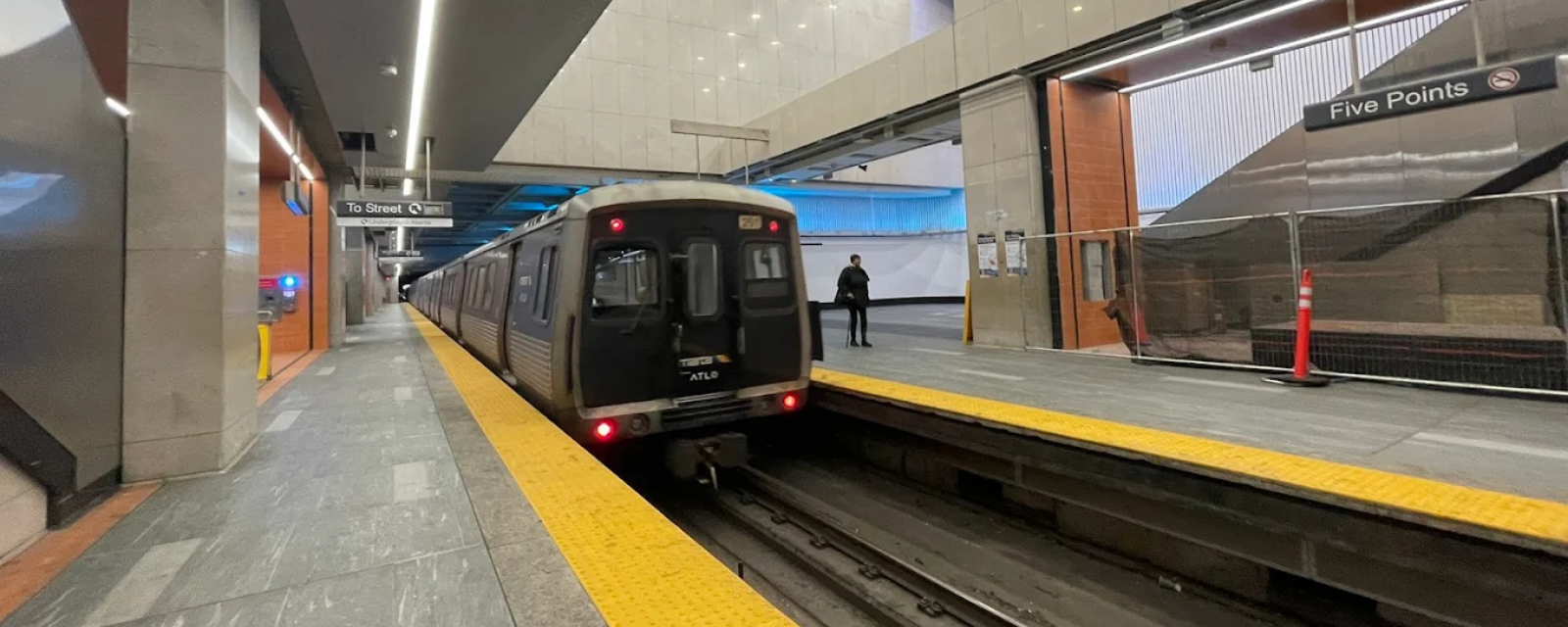
Atlanta hosted eight World Cup matches at Atlanta Stadium this summer, and by the tournament's midpoint MARTA had already moved 1.7 million people to matches, more than 10 FIFA Fan Festivals, and surrounding events across the city. The hub doing the heaviest lifting sat right in the middle of downtown. Five Points Station has been the quiet main character of Atlanta's global moment.
If you rode MARTA at any point in the last few weeks, you already know. The station has been the crossroads for anyone headed to the Atlanta Stadium, the Fan Festivals, or just trying to get downtown without dealing with match-day traffic. According to a piece by Perkins and Will in SaportaReport, the station has been central to how visitors experience the city and the events themselves.
Why Five Points became the World Cup's front door
We're currently filming our This Is Atlanta: Downtown season. In the process of telling this story, we noticed that the improvements to Five Points Station have yet to complete. Yet and still, people from every corner of the globe stepped off a train and some got their first look at Atlanta. First impressions at a transit hub are the whole ballgame when the world is watching, and Five Points has been carrying that weight for weeks.
MARTA has taken plenty of heat over the years, some of it fair, some of it lazy. But when you're moving that many people to and from World Cup matches and festivals without the whole city grinding to a halt, that's infrastructure doing exactly what it was built to do. The busiest single day was June 24 for the Morocco vs. Haiti match: 220,000 rail riders, about 2.3 times a typical weekday.
What 1.7 million riders means for downtown
It means the businesses around the station should’ve been feeding and hosting a global audience. It means the sidewalks between the station and the stadium were packed with jerseys from countries most Atlantans couldn't find on a map two months ago. And it means downtown, which has spent years fighting the perception that it's only alive on game day, got a real stress test and passed. Our earlier piece on MARTA and Big Boi's World Cup partnership laid out how the agency was making its case to visitors to trust the train. And if you want context on where the system goes from here, our 2026 MARTA roadmap is worth a read, even though the new CQ400 rail cars were delayed before the tournament opened. Those cars are part of a $700 million investment that will reshape the system in the years ahead, World Cup or not.
The design piece nobody talks about until it matters
Transit design is one of those things you don't notice when it works and can't stop noticing when it doesn't. The Perkins and Will renovation at Five Points focused specifically on the pressure points: lighting that sweeps along ceilings as a continuous path to follow, flooring markers at stair and escalator thresholds, and granite signage built to hold up through years of heavy use. Atlanta has always been a car city fighting to be something more, and Five Points is where that fight plays out.
Atlanta spent years being told it couldn't host the world without gridlock, embarrassment, or something going sideways. 1.7 million rides later, that story doesn't hold up. Five Points did the job. The people who designed it, the operators who ran it, and the riders who trusted it all made the case that this city can move at a global scale. The World Cup will end Sunday, but the bar has been raised, and downtown should never go back to being written off as a weekend-only district.


