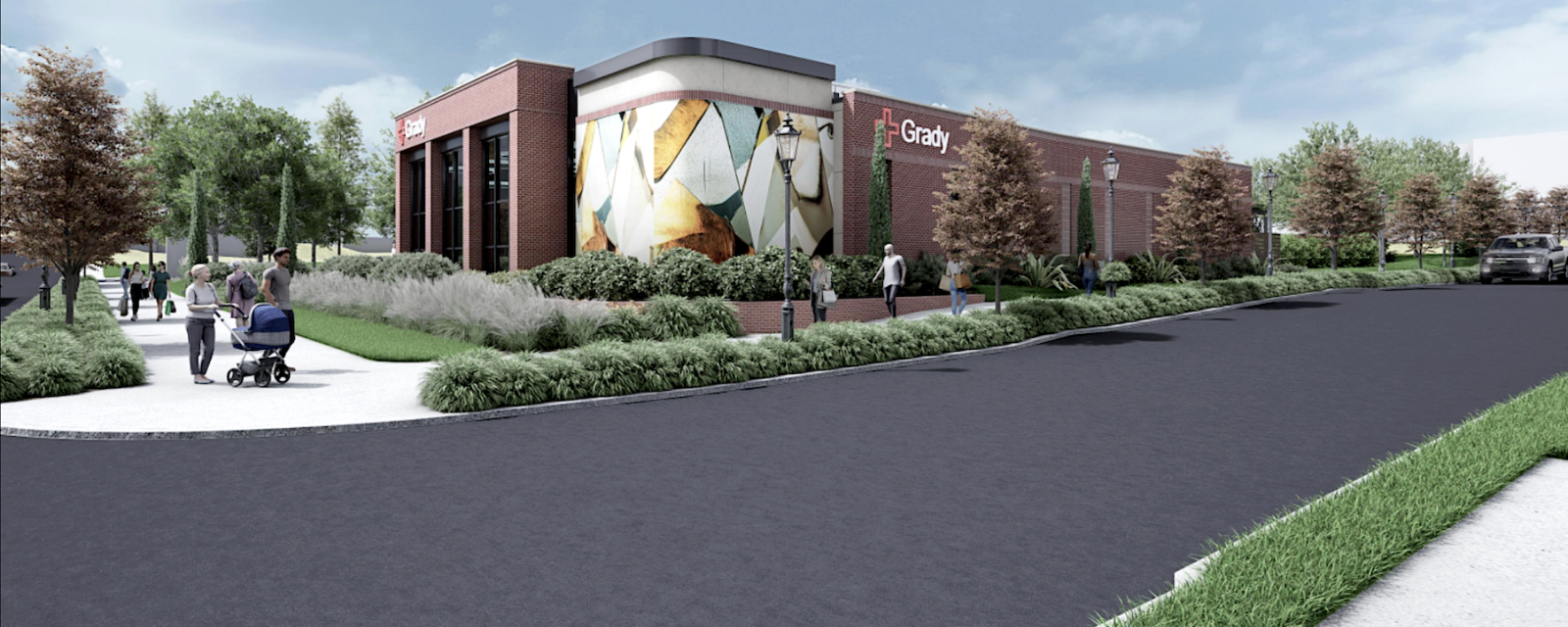
A long-vacant corner lot in Cabbagetown is finally getting plans. Grady Memorial Hospital, Atlanta's main public hospital and trauma center, wants to bring urgent-care services to 724/736 Memorial Drive SE, near Cabbagetown's eastern edge, and a couple minutes away from Madison Yards. The facility has a name: Grady Estoria Urgent Care, after Estoria Street, and it's sized at 5,973 square feet. Good news on paper. The site plans? That's where the conversation gets spicy.
According to Urbanize Atlanta, the majority of the land use at this site would be devoted to 42 surface parking spaces, with drivers entering from Memorial Drive. Trees and landscape screening are also part of the package. And that is the rub, because Memorial Drive is not just any corridor. It's the kind of stretch where neighbors have been asking for more walkable, pedestrian-friendly investment for years.
So what is actually going on the lot?
A Grady urgent care, plus the surface parking lot to serve it. That is the meat of it. The site was previously home to Cummin Landscape Supply, which vacated about four years ago, so the corner has been sitting empty for a while. On the other hand, when the site finally lands a tenant and the dominant feature of the site plan is asphalt, you can understand why folks who have been pushing for a more thoughtful Memorial Drive are frustrated.
And I get both sides here. Atlanta could use more urgent care access, but this isn't actually a healthcare desert getting its first option, AllCare Primary & Immediate Care already operates less than a block east of this site in Reynoldstown. So the real story isn't "Grady fills a gap," it's "Grady is adding a second option on the same stretch, and how they design it matters. However, Grady is not a luxury developer chasing rooftop bars. It is the safety-net hospital that keeps this region functional. But a 42-space surface lot on a corner that could anchor a walkable node near the Atlanta BeltLine? Is that the trade-off neighbors are sitting with and will the center keep the parking free to the patients?
Why are urbanists pushing back so hard?
Because Cabbagetown sits in one of the most pedestrian-active pockets of the city. The Beltline's Eastside Trail is right there. Krog Street Tunnel is right there. People walk and bike through this neighborhood at all hours. A medical office is exactly the kind of use that benefits from being woven into a walkable streetscape, not pulled back behind a parking field. Plans went before the Cabbagetown Neighborhood Improvement Association, which is the right community process for a project like this.
One urbanist account on X didn't mince words, calling the design out as a missed opportunity for the corridor. Others have pointed out that medical and urgent care uses do typically require parking minimums that surprise people, sometimes 3.5 to 7 spaces per 1,000 square feet depending on the jurisdiction. At 42 spaces for a 5,973-square-foot building, this project lands right at the top of that range roughly 7 spaces per 1,000 square feet. Grady isn't just meeting a minimum, it's building to the ceiling of what's allowed.
How this fits the bigger Atlanta medical real estate moment
Grady is not the only hospital system staking out new territory in Atlanta neighborhoods right now. We covered Buckhead Medical Center coming to Piedmont Road,and the comparison is worth a closer look than "denser and more urban." Buckhead Medical isn't exactly a walk-up storefront either — it has its own patient parking deck and valet service. The real difference is design intent: CP Group is pairing that project with six restaurants and street-level retail along Piedmont Road, actively trying to activate the sidewalk. Grady's plan puts parking at the curb instead. One project is designing for pedestrians in addition to cars. The other, so far, isn't.
It is also worth pulling back and looking at how Atlanta is rethinking long-vacant lots across the city. The Atlanta Civic Center redevelopment is a totally different beast in terms of scale, but the underlying question is the same: when land finally moves, who decides what gets prioritized, the developer or the neighbors who have to live with it?
Cabbagetown deserves the urgent care. Full stop. Healthcare access in walkable neighborhoods is a public good, and Grady showing up in this corner of the city is meaningful. But 42 surface spaces on a Memorial Drive corner, steps from the Beltline, is the kind of design choice that ages badly. Five years from now, when this stretch is even denser and even more walkable, that asphalt is going to look like a missed opportunity carved in stone. Grady can build the urgent care Cabbagetown needs and design it for the neighborhood Cabbagetown already is. Those two things are not in conflict. They just require the will to do both.


