A billion-dollar announcement usually comes with a site plan, acreage and a groundbreaking date.
This one came with a ribbon and a room that already existed.
On October 8, 2026, Georgia Tech and Emory announced more than $1 billion in combined artificial-intelligence commitments: approximately $600 million from Emory and more than $575 million from Georgia Tech. Four days later, Georgia Tech unveiled Nexus, a $20 million supercomputer, at Technology Square.
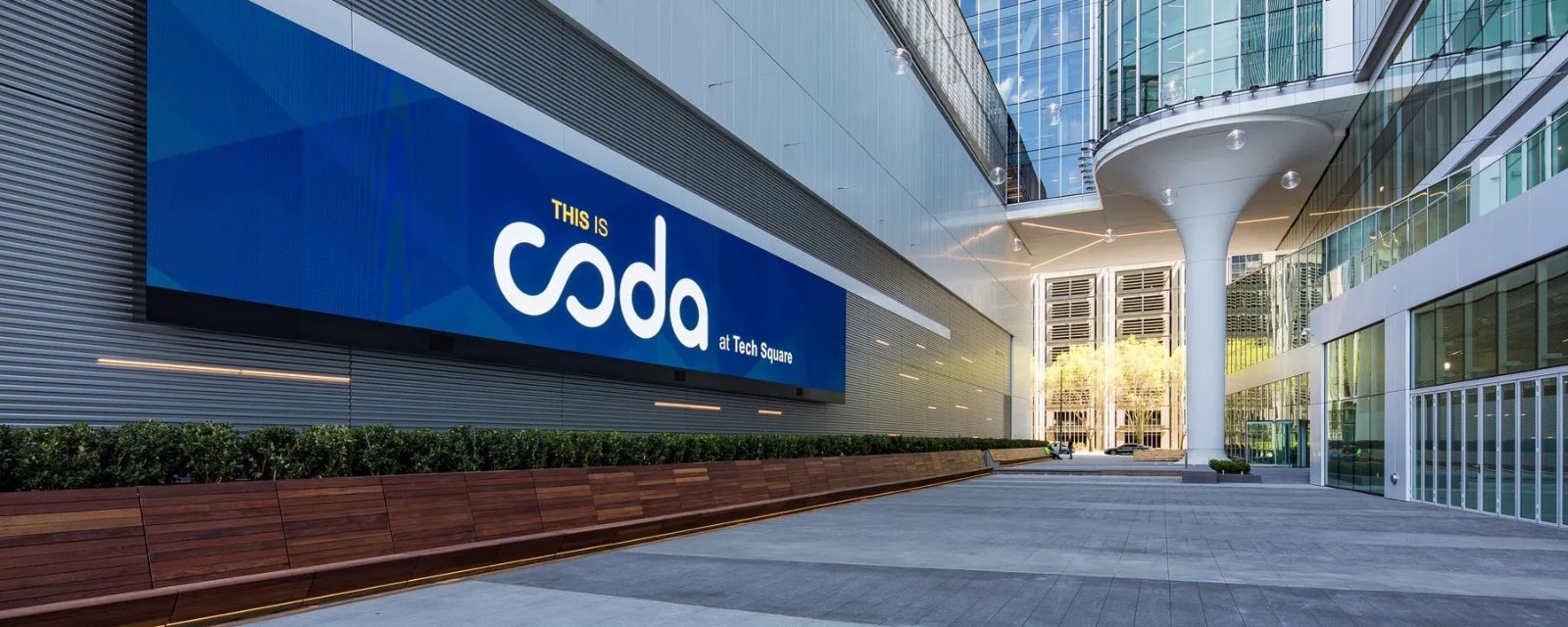
Nexus sits inside the Coda building, which opened in 2019.
What the billion dollars actually covers
The joint announcement provides no spending period or start year. It describes commitments made over time, not a new construction budget.
Nearly half of Emory’s approximately $600 million has already gone toward recruiting and retaining talent in Atlanta. Georgia Tech’s share includes advanced computing infrastructure, a campuswide computing platform and Nexus, with funding from the university, private industry and the National Science Foundation.
The total includes faculty, research programs, workforce development and equipment. It does not represent $1 billion in new buildings.
That distinction matters for anyone reading the announcement as a development pipeline. There is no new site, tower or construction schedule inside the headline figure.
Where the machine landed
Nexus was funded through a $20 million NSF award (National Science Foundation) and developed with the University of Illinois Urbana-Champaign.
At least 90 percent of its capacity will be available to researchers nationwide through an NSF allocation process. Ten percent will remain available to Georgia Tech researchers.
The machine is physically in Midtown, but most of its capacity serves a national research community. That strengthens Atlanta’s position in the research economy without creating a new development site.
Nexus is equipment installed inside a building that has been operating for seven years.
The room came first
Portman and Georgia Tech announced Coda in 2016. The building was completed in 2019 with 21 stories, approximately 770,000 total square feet, office and retail space, and a high-performance computing center.
When the NSF announced the Nexus award in July 2025, the agency already identified Coda as the machine’s future home. The system launched in October 2026.
Atlanta, meanwhile, spent those years restricting where new data centers could go.
On September 3, 2024, the City Council passed ordinances defining data centers in the city code, prohibiting them within 2,640 feet of high-capacity transit stations and barring them from the Beltline Overlay District. Council tightened the restrictions further in June 2025.
Coda’s data hall predates those rules.
The contrast with South DeKalb
On August 13, 2026, DeKalb County commissioners unanimously denied a proposed 95-acre data center campus in Ellenwood that the applicant valued at $1.6 billion. No new application can be filed in unincorporated DeKalb before March 30, 2027.
A hyperscale campus covering 95 acres next to homes is not the same as a machine installed inside an existing Midtown building.
But the difference in process is worth noticing.
One proposal required public hearings and ended with a unanimous rejection. Nexus required no land assembly, rezoning or neighborhood vote because its room was completed years before the current debate.
Atlanta wants the research, jobs and investment associated with artificial intelligence. Residents also want answers about electricity demand, water use, land consumption and what surrounding neighborhoods receive in return.
Coda shows one version of that tradeoff: expanding computing capacity inside infrastructure that already exists. It does not settle the larger debate, but it demonstrates that every AI investment does not require a new industrial campus.
The billion-dollar headline is primarily a hiring, research and equipment story, not a new construction announcement. What happens next will appear in smaller documents: electrical and mechanical permits at Coda, university plans for additional AI facilities and any proposal that tests Atlanta’s transit and Beltline restrictions. Those filings will tell us whether the next phase also fits inside existing space or asks another neighborhood to absorb the physical cost of Atlanta’s AI ambitions.


