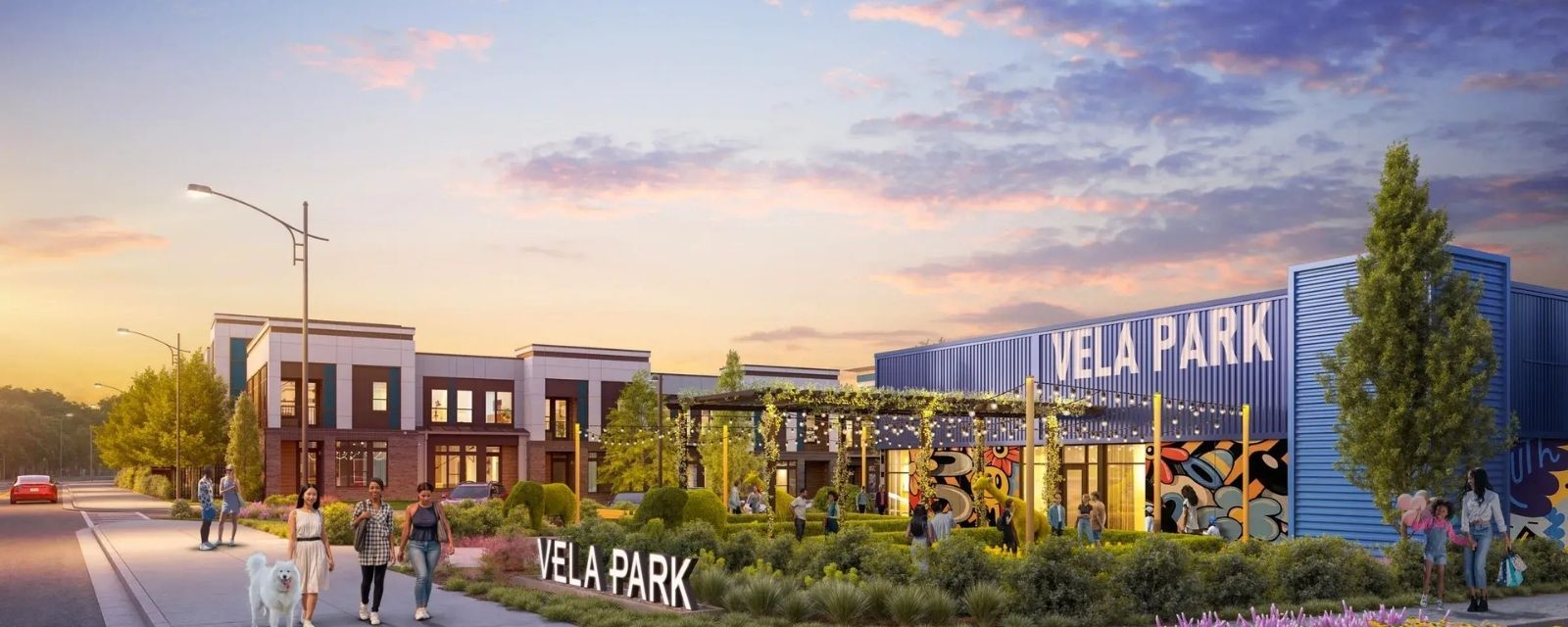
Just south of East Lake Golf Club, an open field that sat empty for decades is now Vela Park.
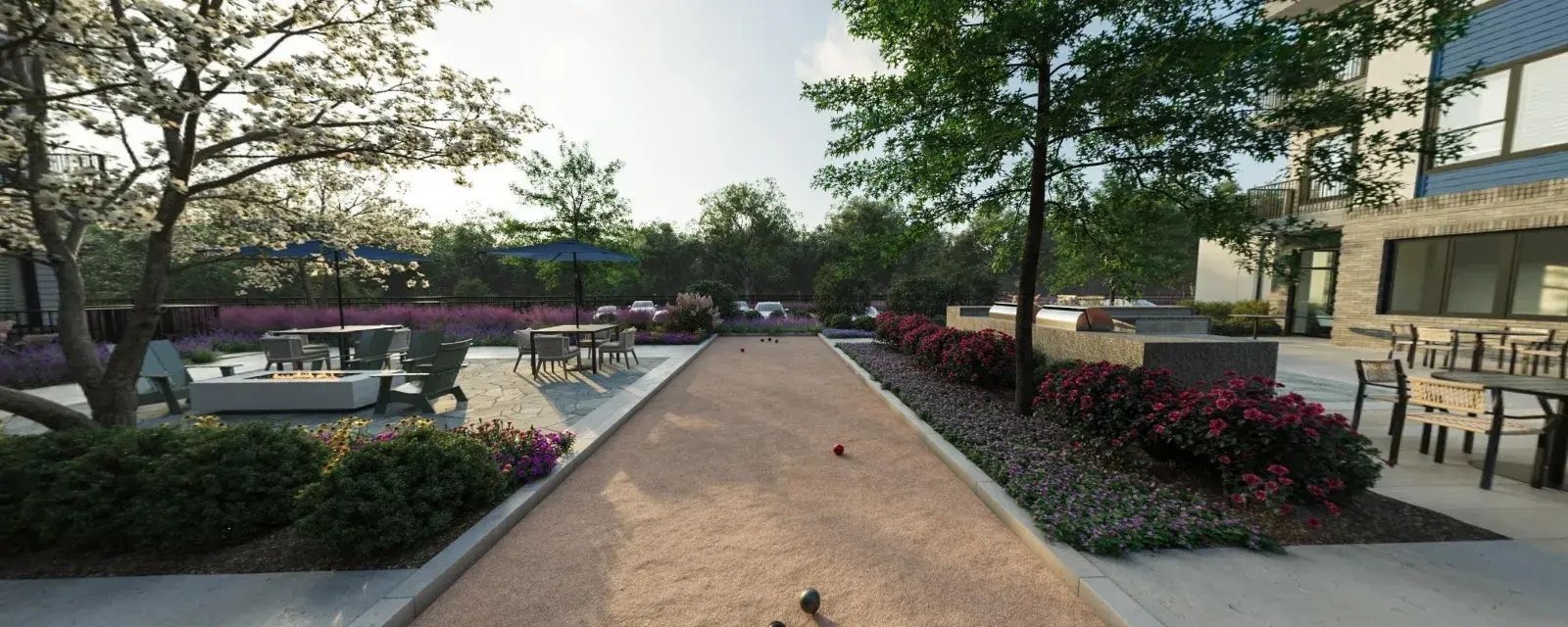
The development has 328 apartments and rental townhomes, approximately 5,000 square feet of retail, a six-kitchen food hall with a full-service bar, co-working space, a podcast studio, a pool, a two-story clubroom and an open green with a pavilion and stage.
The first rentals came online this spring. A broader leasing launch followed in July, and Vela Park Food Works held its grand opening Aug. 5.
That brings us to the question neighbors ask whenever hundreds of new homes arrive at once. Is any of this housing affordable?
The county’s zoning record gives a clear answer. All 328 homes are market rate.
First, where is Vela Park actually located?
The property uses a Decatur mailing address, 1881 2nd Ave., but it is not inside the City of Decatur. It is in unincorporated DeKalb County, immediately south of Atlanta’s East Lake neighborhood.
Vela Park and Perennial Properties market the development as East Lake. That describes the area, not the government responsible for its zoning.
What the rezoning application promised
Perennial initially sought to rezone 11.75 acres from commercial and industrial classifications to medium-density multifamily residential. A later rezoning added land at 710 Fayetteville Road and brought the total plan from 281 to 328 homes.
The original DeKalb County zoning record described the first 281 units as market-rate rental townhomes and apartments. No homes were reserved at income-restricted rents.
The affordability argument was instead based on size. Most of the apartments would be studios or one-bedrooms, which the development team presented as relatively less expensive than larger homes. Its legal representatives said the development would provide housing for “young professionals and empty-nesters.”
The current prices show why that distinction matters.
As of Sept. 8, studios on the project’s website start at $1,493 for 522 square feet.Two-bedroom apartments start at $2,110. A three-bedroom townhome with 1,879 square feet starts at $3,791.
A studio may cost less than a townhome. That does not make it affordable housing. There is no income limit attached to the resident and no restricted rent attached to the unit.
What neighbors can use without living here
The housing is private, but part of the project is meant for the broader neighborhood.
Vela Park Food Works includes Flora D’Italia, Southern Belle Chicken Co., Fuzzy’s, La Tropical and MiMi Taqueria, Doug’s NC BBQ and DessertBox.
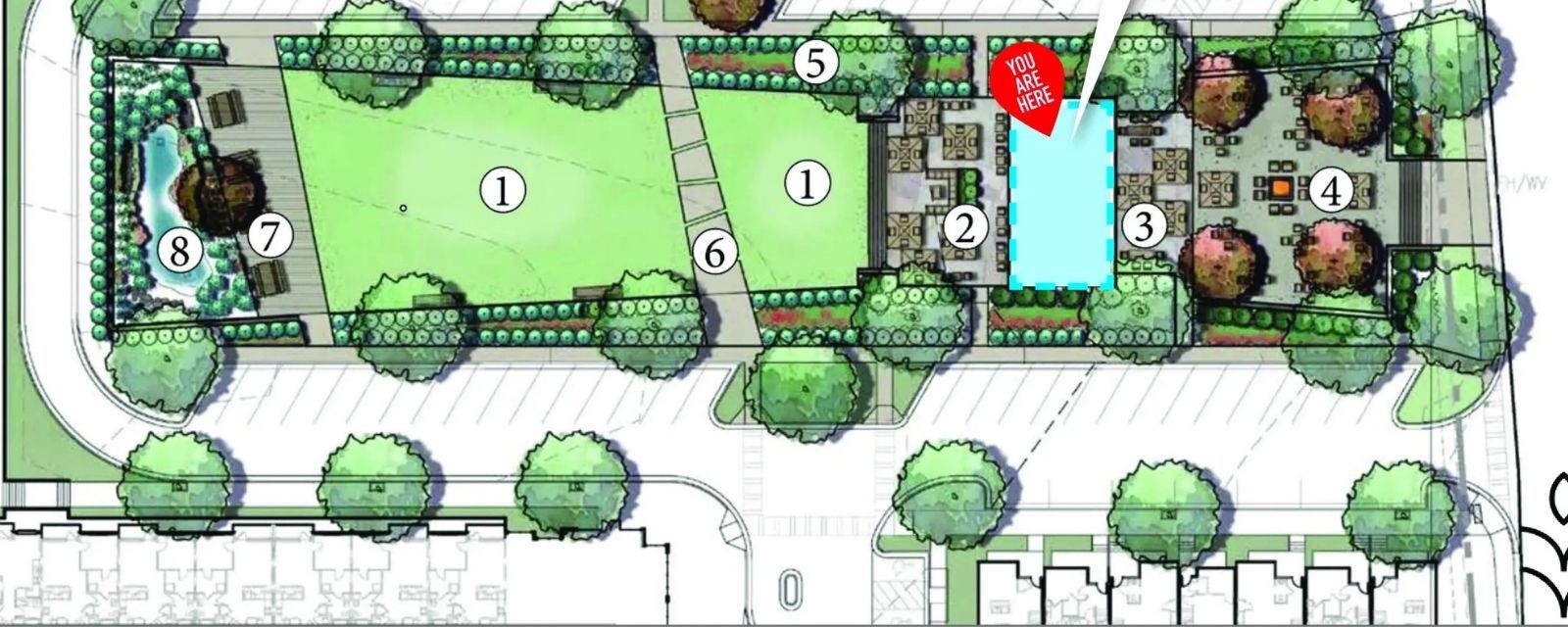
The green is open to the public, with outdoor seating, a pavilion and a stage. Perennial is also building an eight-foot-wide walking path along the property’s north side, connecting 2nd Avenue with Fayetteville Road and the Publix at East Lake.
Programming is no longer theoretical. The food hall now publishes a calendar that includes trivia, live music, watch parties, outdoor movies and other events.
For someone who currently drives to the Publix because the walk along this stretch is uncomfortable, the new path may be the project’s most useful neighborhood improvement.
How Vela Park fits into the surrounding development
Perennial also developed Ella, a 230-unit apartment community with retail near the Publix on Glenwood Avenue.
Immediately south of Ella, Gardenside at the Villages of East Lake contains 108 affordable and market-rate apartments, townhomes and villas. That mixed-income development is separate from Vela Park.
Perennial says its cumulative investment in the East Lake area now exceeds $200 million. That figure covers its broader work in the area, not Vela Park alone.
Vela Park broke ground in early 2024 after its original 2022 plan grew from 281 homes to 328. The project arrived later than its initial late-2025 or early-2026 target, but the housing terms never changed. Every unit remained market rate.
Vela Park delivered new housing, food options, public space and a walking connection that neighbors can actually use. Those are real additions.
But smaller does not automatically mean affordable. A $1,493 studio may be the least expensive home in this development, but it is not an income-restricted home. If we are going to understand who can live in the communities being built around us, that distinction has to remain clear.
If you live near 2nd Avenue, would you use the food hall, green and walking path even if the housing itself is outside your budget?


