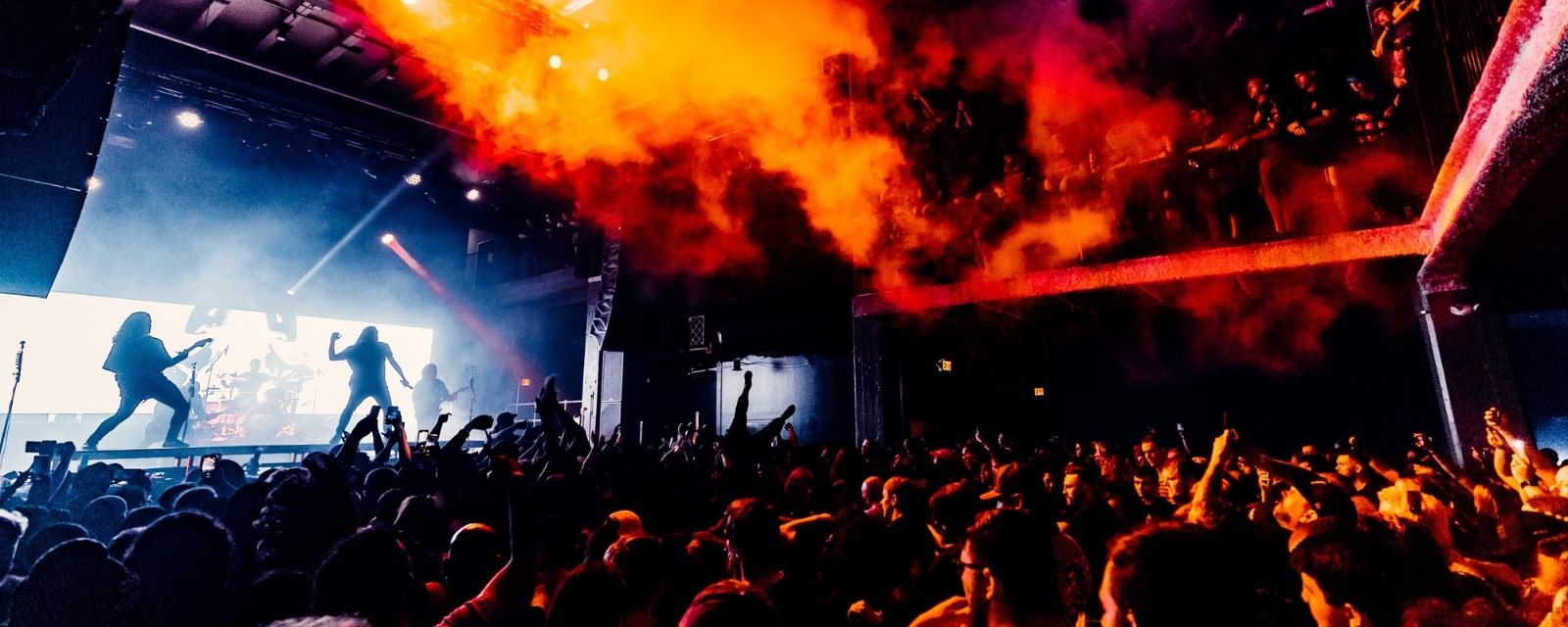
Heaven, Hell, Purgatory and Altar. If you have spent a Friday night in one of those rooms, you have already stood inside four of the seven stages Underground Atlanta now counts as open.
The Masquerade moved into Kenny’s Alley in November 2016, four years before Shaneel Lalani bought Underground Atlanta. Its original three rooms came with it. Altar, its fourth, opened in 2024.
That history matters because Underground’s ten-stage music district is real, but much of its foundation was already operating or came from established Atlanta venues.
Seven stages are open today. Four belong to The Masquerade. Two are inside Lunchbox, the recently opened nightclub near MJQ Concourse. The seventh is MJQ, which opened in the former Dante’s Down the Hatch space in January 2025 after nearly 30 years on Ponce de Leon Avenue.
Three more are planned by the end of 2027: two at Ravine and one inside the returning Latin restaurant and live-music venue Loca Luna.
What actually changes downtown
The additions extend beyond concert stages.
Ela Rey, a coffee shop from the sisters behind Daiquiriville, is expected to open on Lower Alabama Street this month. A six-stall food hall is planned for the former Foot Locker at Alabama and Pryor streets in 2027.
For downtown workers, Georgia State students and anyone walking through Five Points, that creates more reasons to remain in the district between events. Coffee in the morning, more lunch choices and another room for live music are meaningful additions to blocks that have struggled to sustain everyday foot traffic.
Some of that work follows the $925,000 World Cup improvement package approved for seating, lighting, landscaping, murals and small-business improvements around Upper Alabama Street and Peachtree Fountains Plaza. That package also included money for an Underground Diner buildout on Pryor Street, which was expected to be serving by October. The latest announcement does not list it.
What has not changed is the piece Lalani says makes the district work long term: nobody lives there yet.
Venues can draw crowds for a show. Residents support a coffee shop on a Tuesday, buy lunch without an event and create foot traffic after offices close.
The housing plan keeps moving
In 2023, Lalani Ventures proposed converting 34 Peachtree Street into roughly 200 apartments.
A different plan emerged in 2024. Lalani Ventures and Exact Capital proposed a 405-unit tower at 76 Wall Street with student, market-rate and income-restricted housing. Invest Atlanta approved a preliminary inducement for up to $40 million in tax-exempt bond financing. Of the 405 units, 163 were planned for households earning no more than 60 percent of area median income ($49,500 for a single adult).
The latest Underground announcement does not say what happened to that project.
Attention has returned to 34 Peachtree. By September, the proposal was no longer just an announcement. Our construction update found aluminum framing standing inside the former office tower, with 20 floors planned for 300 apartments.
Phase one covered 10 floors and 150 units, with completion projected for summer 2027 and rents projected at $1,100 to $1,400. Phase two still had no published delivery date.
The latest announcement describes the first phase as 146 units instead of 150. Four units may be a construction adjustment. The larger issue is that the housing anchor has moved between two addresses, several unit counts and multiple schedules while the entertainment district has continued opening around it.
What the ten-stage number means
Four of the seven operating stages belong to a venue company that arrived before Lalani. MJQ is another established Atlanta club that relocated. Lunchbox is the clearest new addition.
Ravine also needs careful wording. It held a promoted grand-opening event at Underground in October 2025, but the latest announcement still counts its two stages among those expected to open in 2027. The question is not whether Ravine has ever hosted a show there. It is whether the promised two-stage venue begins operating regularly.
Gathering established operators in previously empty spaces is a legitimate redevelopment strategy. It can fill a district faster than creating ten new venues and ten new audiences from scratch. But it is different from delivering ten entirely new stages.
I have been down there enough to know the venues are real and the lights are on, and I am not going to pretend otherwise because a housing plan keeps changing addresses. But stages are the easy half. A venue signs a lease and opens. Apartments need framing, capital and somebody to move in. The unit count has gone from 200, to 405 at a different address, to 300, and now to 146 in a first phase, all within three years. I am watching three things between now and next summer: whether phase one at 34 Peachtree delivers by summer 2027 and at what number, whether Ravine begins operating regularly after missing its earlier timeline, and whether anyone says a word about the 76 Wall Street tower the city was asked to support with $40 million in bond financing.


