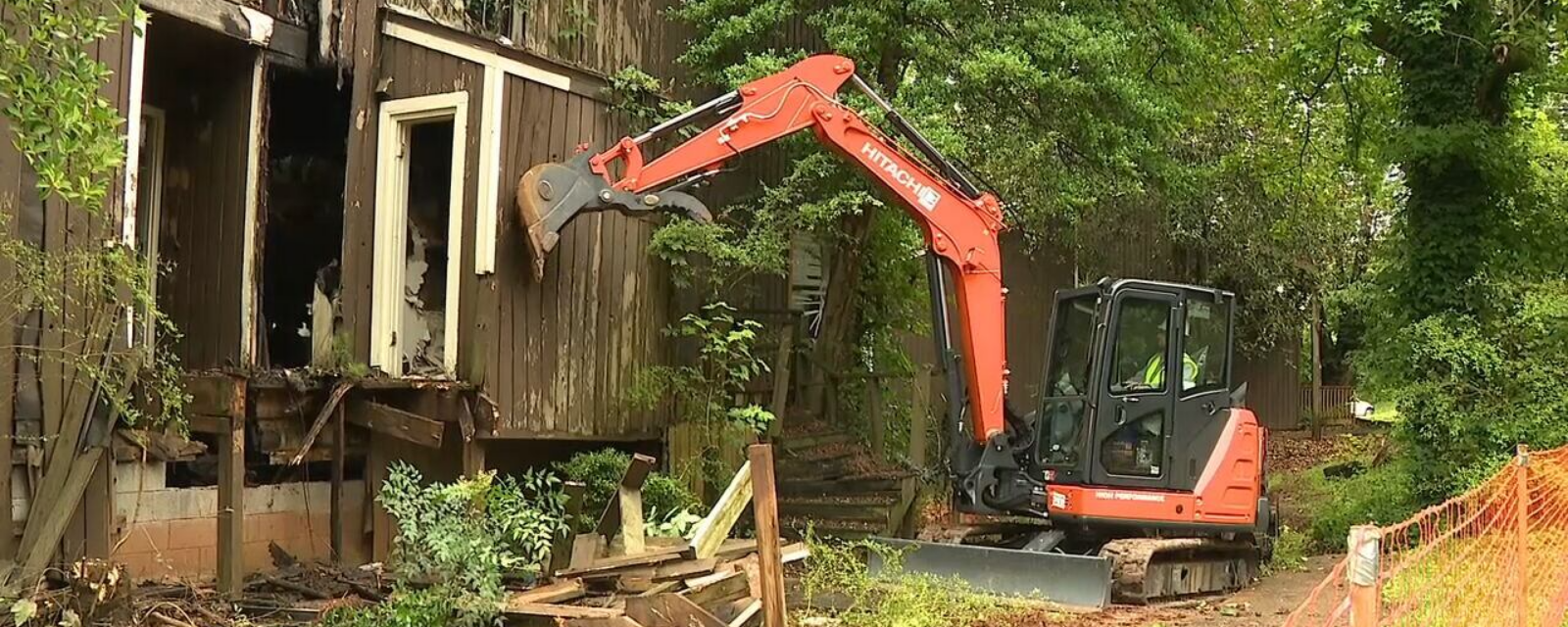
DeKalb County just rolled out a new blight tax that could hit up to 60 severely neglected properties with dramatically higher assessments, and the message to owners letting buildings decay is finally showing some teeth. DeKalb County CEO Lorraine Cochran-Johnson announced the initiative on July 21 alongside a dedicated Blight Tax Task Force charged with identifying qualifying properties.
Here's how it works: once a judge officially declares a property blighted, damaged, decayed, or ruined, the county can raise its tax rate up to 10 times the normal amount. That's not a typo. The ordinance is aimed at commercial buildings that have been abandoned or allowed to fall into dangerous disrepair, the kind of properties that drag down entire blocks and become magnets for everything a neighborhood doesn't want.
So what actually counts as 'blighted'?
This is where it gets interesting, and where residents should be paying close attention. A property doesn't automatically get slapped with the higher rate. The county designates a public officer to inspect the property, produce a written report, and serve it on the owner. The owner then has 30 days to remediate or request a hearing in front of a judge. Only after a judge rules for the county does the blight tax kick in. The process has a clear off-ramp built in: fix the problem and avoid the penalty.
The county is starting with up to 60 properties. That's a deliberately small list, which tells me leaders want early wins, not a fight with every commercial landlord in the county. Reporting properties works through DeKalb's code enforcement line at (404) 687-3700, so if there's a building near you that's been sitting empty and dangerous for years, there's now a mechanism with actual financial consequences behind it.
Will this fix blight or just push it around?
Here's the question I keep coming back to. A 10x tax hike is a serious hammer. For an owner sitting on a property waiting for the market to swing, suddenly the math changes: rehab it, sell it, or watch the tax bill balloon. That's the intent, and it's overdue. Atlanta has watched too many commercial corridors get held hostage by absentee owners who treat neglected buildings as long-term speculation plays.
It's also worth noting what happened when Atlanta tried this. The city adopted its own blight tax in August 2024. A city auditor later found Atlanta has not yet collected a single dollar from it, largely because the implementation process wasn't clearly defined. DeKalb structured its ordinance with a clearer legal path specifically to avoid that problem. Whether the execution matches the design is the thing to watch.
But the other side of the coin is real. When properties do change hands under pressure, who buys them? In neighborhoods already dealing with development pressure, a blight tax can accelerate turnover that residents didn't ask for and can't afford to compete with. We've seen versions of this dynamic play out across metro Atlanta, which is part of why Senator Warnock has been pushing to cap private equity from scooping up single-family homes. Different tool, same underlying worry: who ends up owning the neighborhood when the pressure builds.
Why this matters beyond DeKalb
Every county in metro Atlanta is watching. If DeKalb's rollout actually moves the needle on neglected commercial properties without triggering displacement chaos, expect Fulton, Cobb, and Gwinnett to study the playbook. Policy questions like this are increasingly where the real fights over Atlanta's future are being fought, quietly, in ordinance language most people never read. It's the same reason we've been paying attention to stories like how local councils are conducting business. The unglamorous procedural stuff is where the city actually gets shaped.
Commercial blight doesn't stay on the commercial parcel. It affects the businesses next door, the property values on the residential streets behind it, and the daily experience of walking or driving past it. The local restaurants, the corner shops, the businesses people depend on, all of them do better when the corridors around them are cared for. Blight compounds. So does investment.
Knowing that taxes collected go towards supporting community redevelopment, fix run-down areas, and help property owners make repairs is reason enough and DeKalb is right to swing it. For years, owners of derelict commercial buildings have externalized the cost of their neglect onto the neighborhoods around them, and residents have absorbed it. A tax that finally makes doing nothing more expensive than doing something is the kind of policy that changes behavior. Cochran-Johnson put it plainly: invest in your properties or move them along to someone who will. The county needs to be transparent about which 60 properties make the list and what happens to them next, but starting the meter is the right move. Atlanta neighborhoods deserve owners who show up.


