The abandoned Texaco near the Bowen Homes redevelopment is finally on a city list with an address beside it.
It is one of five blighted properties Atlanta is moving toward condemnation after years of complaints, code enforcement and promises to clean up neglected properties across the Westside.
The properties are: 533 English Ave. NW,748 Neal St. NW,293 Sunset Ave. NW,699 Joseph E. Boone Blvd. NW, and 2795 Donald Lee Hollowell Pkwy. NW.
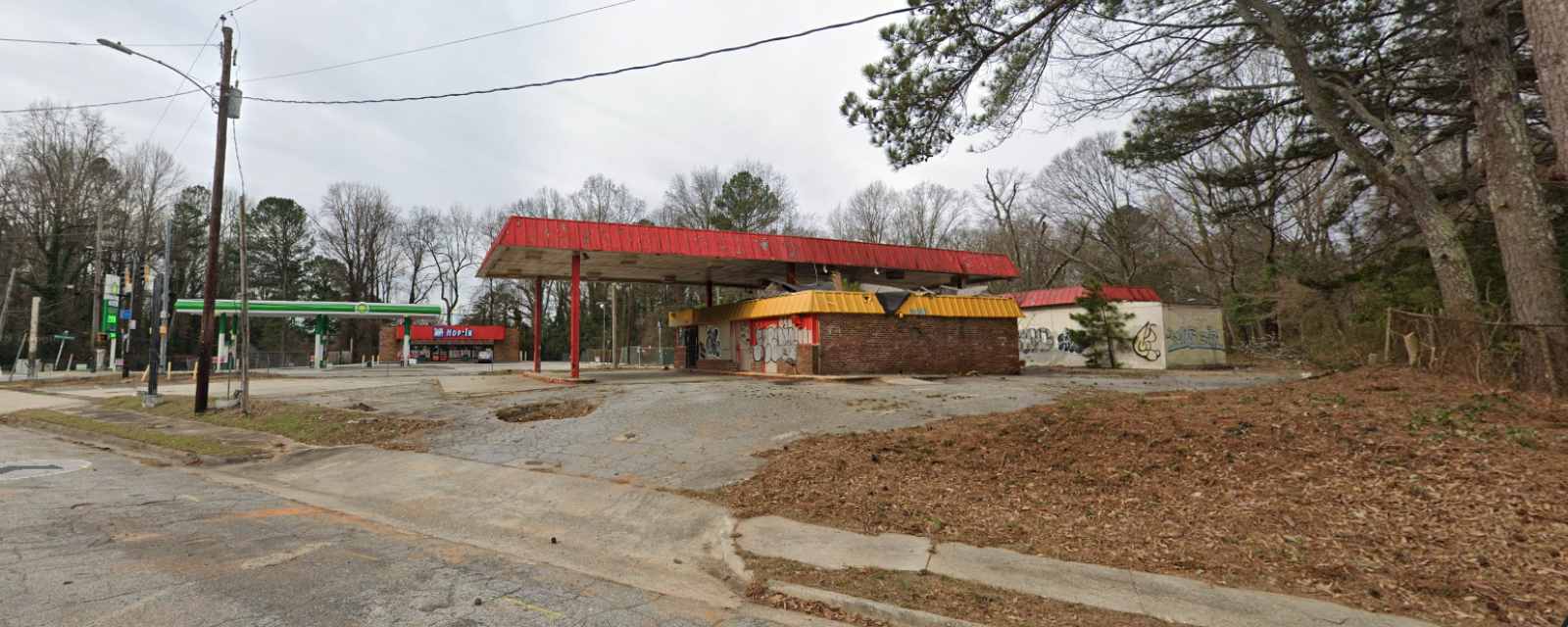
The last address is the former Texaco pictured below, near the entrance to the 74-acre Bowen Homes redevelopment. Construction began there in March 2025, with approximately 2,000 homes planned across multiple phases.
On Aug. 25, the Atlanta City Council’s Community Development and Human Services Committee unanimously recommended resolutions allowing the city to begin condemnation proceedings against the five properties. The next full Council meeting is scheduled for Sept. 8.
That is movement. It is not a city takeover yet.
What Council approval would actually do
If the full Council approves the resolutions, Mayor Andre Dickens or his designee could begin the condemnation process.
The city would still need an independent appraisal, owner notification and other legal steps. If eminent domain becomes necessary, Atlanta would have to take the case to Georgia Superior Court. Any purchase would be based on the property’s appraised fair market value.
The resolutions would not make Atlanta the owner, demolish a building or approve anything new for the sites.
So the morning after a Council vote, the Texaco would still be an abandoned gas station.
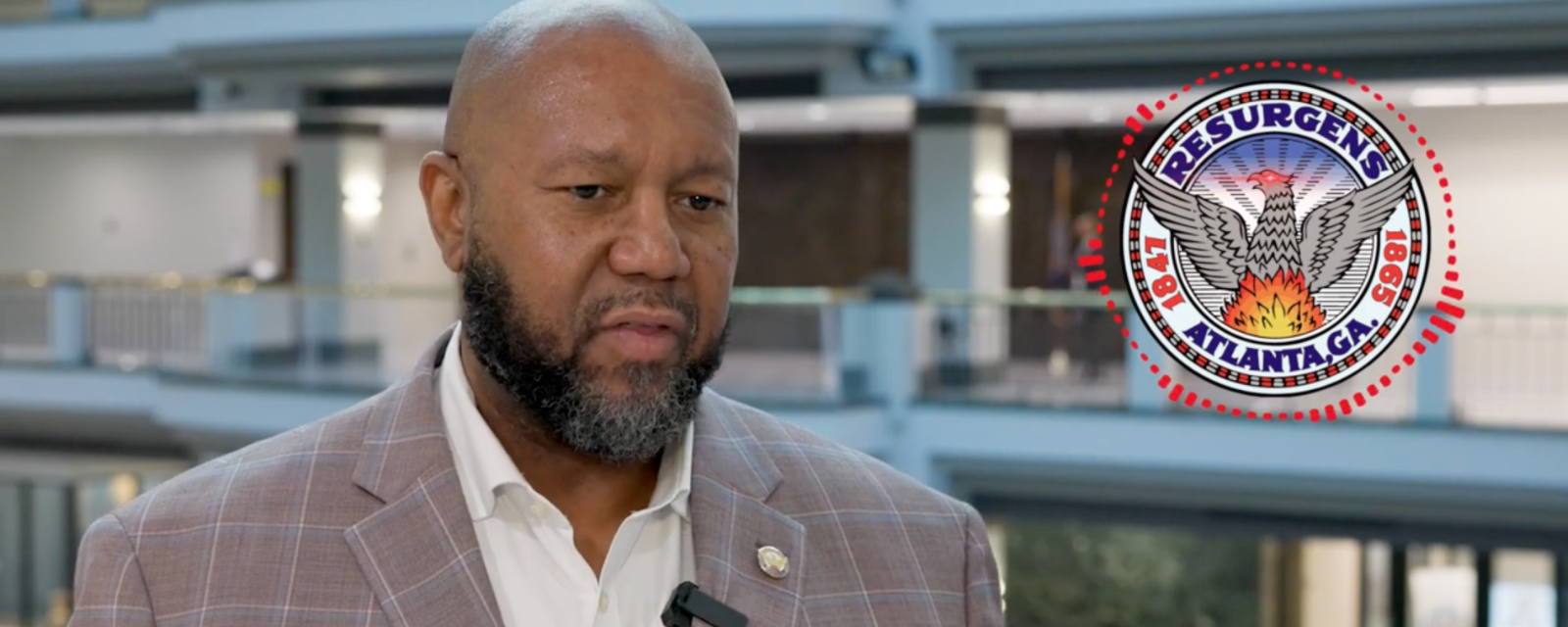
What changes is that a formal process begins on properties District 3 Councilmember Byron Amos says have already gone through traditional code enforcement.
“Blight in Atlanta City Council District Three has become historic,” Amos said.
The city has not announced an acquisition schedule or redevelopment plan for any of the five addresses.
The blight tax is a different tool
Atlanta passed its blight tax in August 2024. It allows the city to increase property taxes on qualifying vacant and blighted property by as much as 25 times the city’s normal millage rate.
The City Auditor’s example shows what that means. A property assessed at $250,000 could see its annual city tax increase from $952 to $23,800.
That kind of bill is meant to pressure an owner to repair, redevelop or sell without the city having to acquire the property.
But a February 2026 audit found that Atlanta had not collected a dollar through the program. The mayor did not appoint the required public officer until April, when City Solicitor Raines Carter received the role.
Then Fulton County Tax Commissioner Arthur Ferdinand told Atlanta that his office would not bill or collect the tax. On May 4, Council made the city’s chief financial officer responsible for ensuring that the higher charge appears on a property’s tax bill.
Council later called for the tax to be used against the long-empty tower at 1155 Peachtree St. That gave the program its first publicly named test case, but Atlanta has not confirmed that a blight-tax payment has been collected.
The city also has not said whether any of these five Westside properties will receive a blight-tax bill.
Five addresses are a start, not an outcome
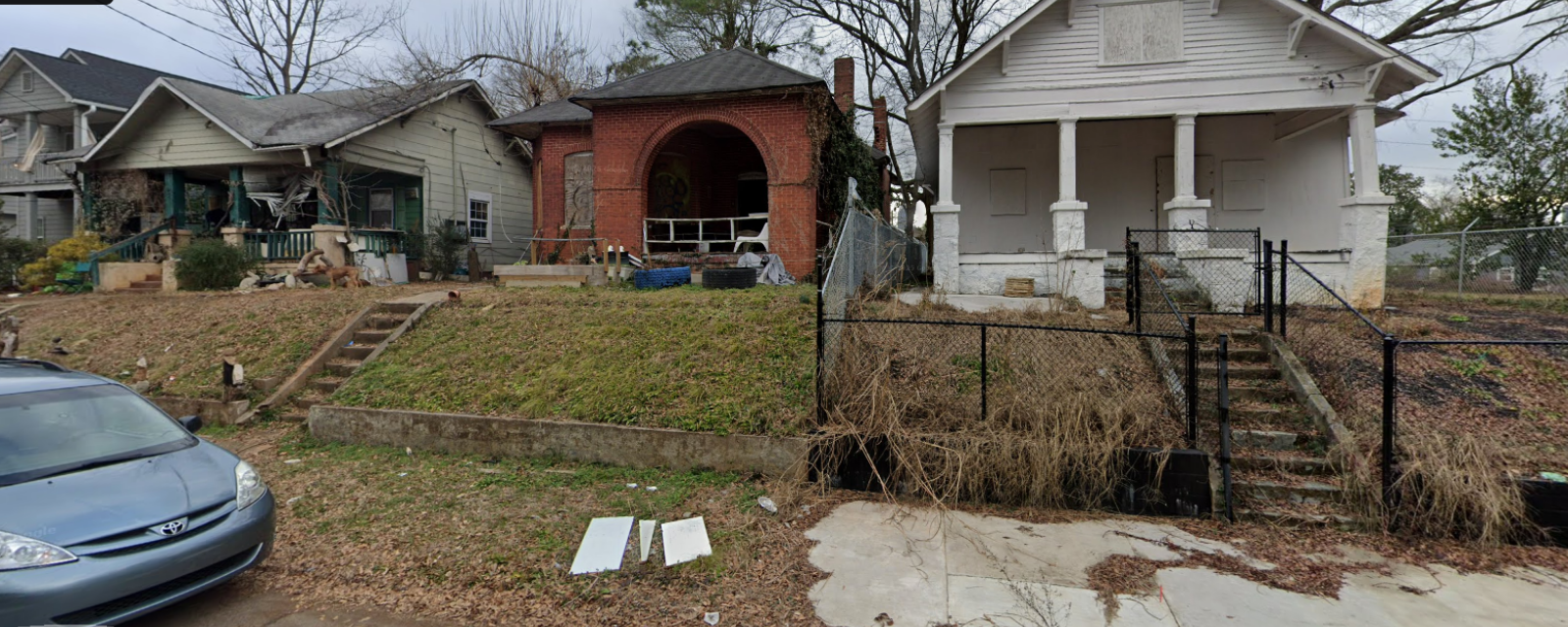
In 2024, city officials identified approximately 3,000 blighted properties across Atlanta. About 540 were in English Avenue and Vine City alone.
The new resolutions put five properties into a specific legal process. That is more concrete than another citywide count, but the result will depend on what happens next.
Residents should watch whether the full Council approves the resolutions, how quickly appraisals and owner notices follow, whether any cases reach Superior Court and what the city proposes for the properties if it acquires them.
Naming five addresses matters. It gives residents something specific to track after years of hearing about programs, tools and citywide totals.
But an address on a resolution is not the same as a cleaned-up property. The real test is whether five becomes fifteen, whether legal filings follow and whether the city’s blight tax finally produces an actual payment.
The old Texaco sits beside one of the Westside’s largest redevelopment projects. Leaving that corner abandoned while 2,000 homes rise next door would make no sense. Atlanta should finish the process it is starting and put that property back into productive use.


