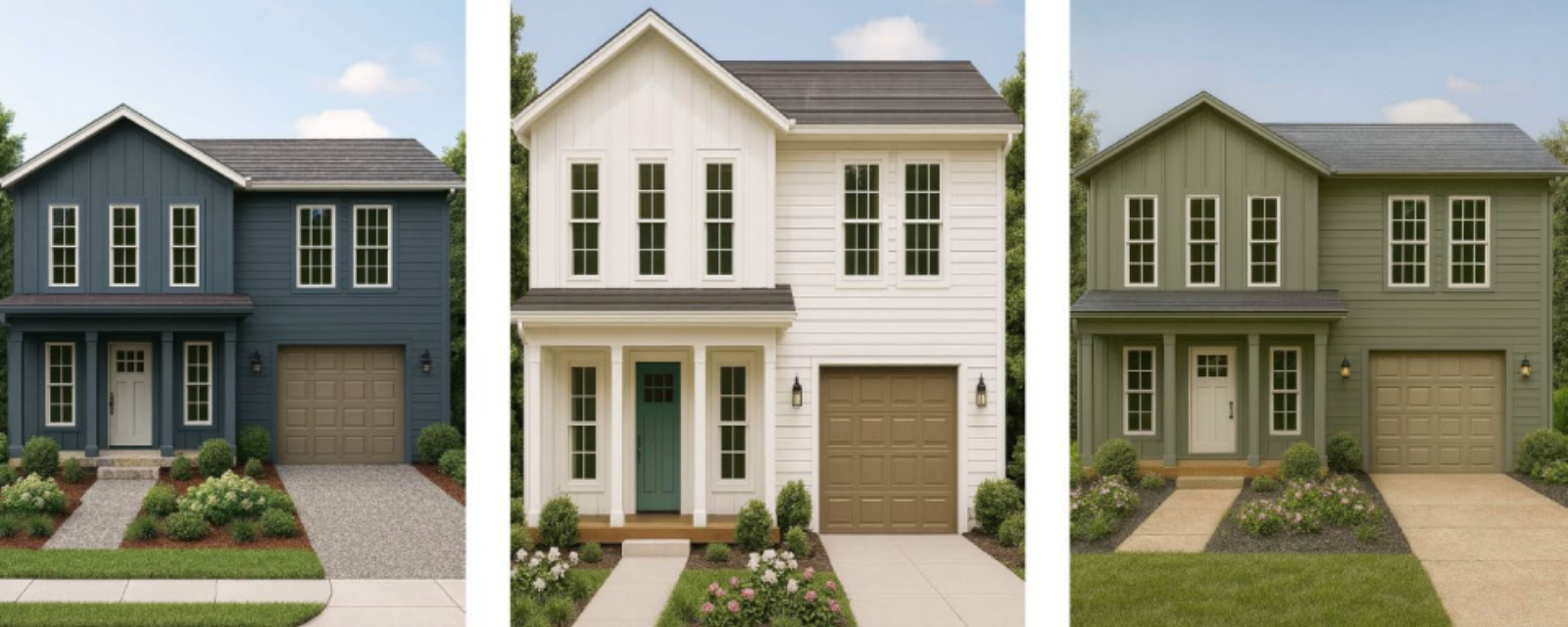
Invest Atlanta approved $6.71 million for approximately 185 new homes on Aug. 27. The largest grant was $2.5 million. However, the grant that prompted questions was the smallest: $210,000 for three homes reserved for Atlanta Police Department officers.
That difference is the story. The board moved millions for affordable housing with little discussion, then stopped over who would be allowed to buy three houses.
Where the $6.71 million is going
The Westside received most of the funding.
An additional $1 million went to Brawley Commons, an 18-unit affordable development at 280 James P. Brawley Drive in Vine City. Westside Future Fund broke ground there on Aug. 17. The homes are planned for households earning between 30% and 80% of Area Median Income.
Three English Avenue projects received a combined $4.5 million. Proctor + Paines received $1.5 million for 25 apartments at 383 Paines Avenue. The 404 @ Oliver Street received $2.5 million for 54 apartments at 404 Oliver Street. Oaks ATL: Room to Grow received $500,000 for five affordable homes that will be sold rather than rented.
In Sylvan Hills, Andover Place received $1 million for 80 apartments at 2769 Lakewood Avenue. Its proposed mix includes one, two and three-bedroom homes at several income levels, with rental assistance planned for 18 units.
The final $210,000 went to the Atlanta Police Foundation for three for-sale homes at 3218 Delmar Lane NW. The project is called Harwell Station.
Together, those six grants support 185 new homes. That is AVV’s arithmetic using the board’s unit counts. The grants represent public contributions, not the full cost of building the projects.
The board separately approved $2 million to rehabilitate 155 existing senior apartments at 555 McDaniel Street SW. Those apartments are not included in the new-home total.
What the income limits mean
Most of the apartments are planned for households earning between 30% and 80% of AMI.
The source used by the board’s reporting puts AMI for a four-person household in the Atlanta region at approximately $114,200. Thirty percent of that figure is about $34,260.
That calculation helps explain the scale, but it is not an official eligibility limit. Actual income limits vary by household size, program and unit.
None of these approvals lowers anyone’s rent today. Brawley Commons has broken ground, while several of the other projects remain in permitting, planning or pre-construction.
The questions now are when construction begins, what the final rents or sale prices will be and how long each home must remain affordable.
Why the police homes drew questions
Board member Ken Zeff questioned whether affordable housing could be reserved for one occupation while excluding other qualified buyers.
Other board members said the arrangement was legal because Invest Atlanta would award the grant to the Atlanta Police Foundation, a nonprofit that would operate the housing program.
That answers how the transaction is structured. It does not settle the larger policy question of whether public housing dollars should favor one profession.
The foundation’s Secure Neighborhoods Program is not new. It has partnered with builders to sell homes to APD officers, who agree to serve as community ambassadors. A 2022 city release said the program had helped 17 officers buy homes in English Avenue and Vine City.
Harwell Station expands that model to a different address.
The smallest grant received the most scrutiny because it came with the narrowest doorway. Most of these developments use income to decide who qualifies. Harwell Station adds an employment requirement. If public money supports the homes, residents should be able to see the buyer requirements, sale prices, affordability period and officer obligations before construction begins. The board approved the structure. The next test is whether the public gets enough information to judge the outcome.


