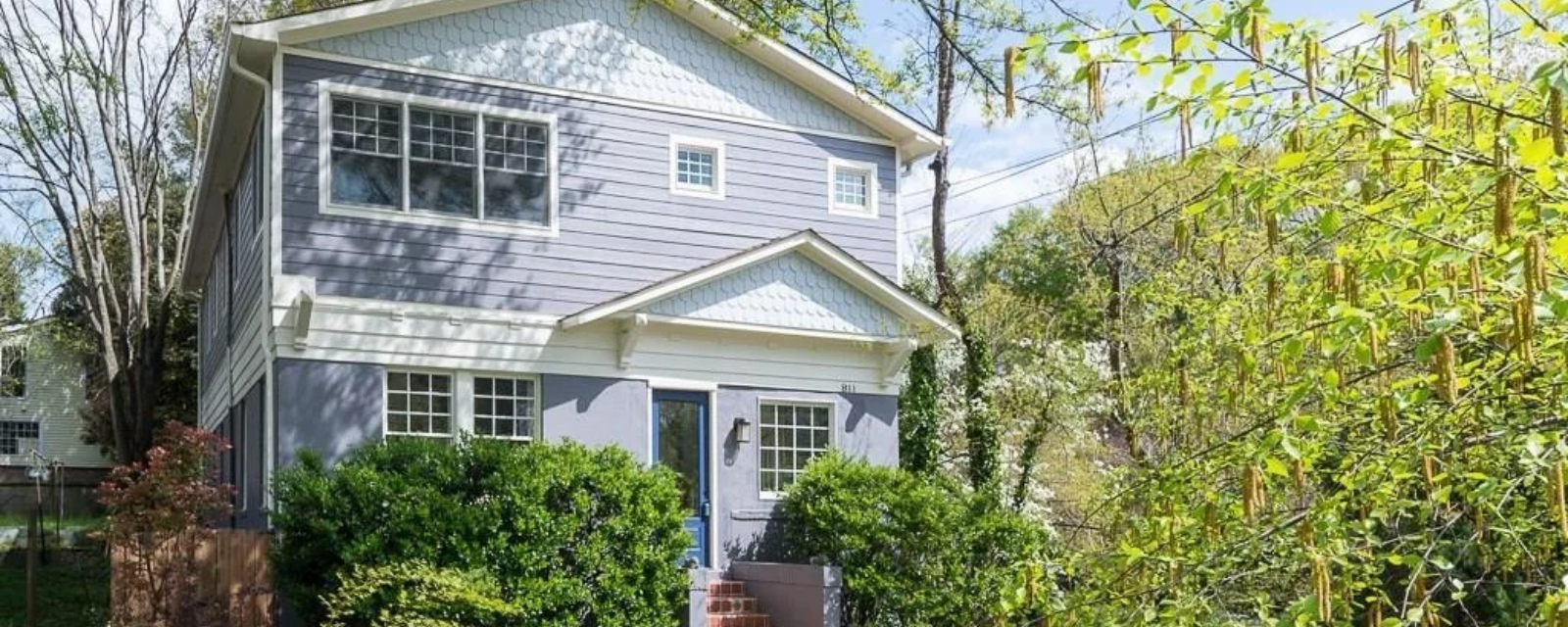
In the early hours of Aug. 3, 1982, an Atlanta police officer walked into a house at 811 Ponce de Leon Place in Virginia-Highland to serve a warrant. The warrant was no longer valid. It came from a ticket Michael Hardwick, a 29-year-old bartender at The Cove, had gotten for carrying an open beer outside the gay bar where he worked, and he had already paid the fine.
The officer found Hardwick in his bedroom with another man. He arrested them both under Georgia’s sodomy law, which carried a penalty of up to 20 years in prison.
Hardwick could have let it go. Instead, he fought, and his case went all the way to the U.S. Supreme Court. In 1986, in Bowers v. Hardwick, the Court ruled 5-4 that the Constitution “does not confer a fundamental right upon homosexuals to engage in sodomy.” For 17 years, that decision told gay Americans that the government could treat their private lives as a crime.
It took time to undo. In 1998, the Supreme Court of Georgia struck down the state’s sodomy law in Powell v. State, ruling that it violated the right to privacy under the Georgia Constitution. In 2003, the U.S. Supreme Court overturned Bowers itself in Lawrence v. Texas. Michael Hardwick saw neither. He died in 1991.
The house where it all began is still standing. But maybe not for long.
Why people are fighting for this house
To advocates, 811 Ponce de Leon Place is not just an old house. It is one of the few physical places left that tells the story of how Atlanta, and the country, treated LGBTQ+ people within living memory.
The city already knows that. When Atlanta published its LGBTQ+ Historic Context Statement in 2023, a framework for identifying places that matter to LGBTQ+ history, Hardwick’s arrest was part of it.
Martin Padgett, who wrote the Hardwick biography “The Many Passions of Michael Hardwick,” told Georgia Voice that a placard marking the house has already been cast but has not yet been installed. He said the arrest site “should be, must be commemorated by the city in the form of a historical marker.”
Atlanta has protected an LGBTQ+ site before: the city designated the former Atlanta Eagle building a landmark. Advocates say Hardwick’s house belongs in that same conversation.
The other side of the story
There is another family in this story, and they did nothing wrong.
Listing records show the 1920s-era house changed hands in October 2025. It was not a landmark then, and it is not one now. The new owners filed to demolish it and build a new single-family home with a swimming pool, the kind of plan homeowners across Atlanta’s Eastside file every week. Nothing in the public record speaks to what they knew about the house’s history or what they intend beyond that filing.
That raises a question worth sitting with. Should someone who bought a home legally, under the rules in place at the time, lose the ability to build the home they planned because of history they may not have known about? Or does a city have a responsibility to protect places that shaped civil rights, even when they sit on private land?
There may be a middle path. Fred O. Smith Jr., a constitutional law professor and NPU-F member, has urged the neighborhood planning unit to negotiate with the owners about whether the original structure could be kept inside the new project. That would mean the owners still build, and the history still stands.
What the council vote does, and what it doesn’t
On Nov. 2, Atlanta City Council voted unanimously to ask the Urban Design Commission’s director to nominate the house as a city landmark. Councilmember Kelsea Bond introduced the resolution, co-sponsored by Alex Wan and Matt Westmoreland. Bond said the home has a “significant connection to LGBTQ+ history” and that losing it would be a loss to the city, state and nation. Westmoreland thanked advocates and historians Fred O. Smith Jr. and Charlie Paine for raising the alarm.
But the vote does not make the house a landmark, and it does not protect it today.
Under Section 16-20.005 of the city’s preservation ordinance, protection begins only when the Urban Design Commission’s director mails a written notice of intent to nominate. The ordinance says interim protection “shall become automatically effective without further action of any kind immediately upon the date and time that the director of the urban design commission mails the notice of intent to nominate.” From that moment, the city cannot accept applications or issue permits of any kind for the property, except for emergency public safety work or work approved under a certificate of appropriateness. That protection lasts up to 120 days, and council can extend it only to match legislative delays, never past 180 days total.
AVV could not confirm whether that notice has been mailed. Until it is, the clock that matters most has not started.
What happens next
Two dates are coming up fast. The Board of Zoning Adjustment will hold a public hearing on the owners’ application, V-26-135, which seeks a zoning variance, at noon on Thursday, Nov. 5, in the council chambers on the second floor of City Hall, 55 Trinity Ave. How the council vote will affect the board’s decision is unclear.
Then NPU-F, which covers Virginia-Highland, Druid Hills, Piedmont Heights, Edmund Park, Lindridge and Morningside, takes up the application again in November after deferring its vote on Oct. 21. The NPU’s vote is advisory, but it carries weight.
Two clocks are running on this house, and they started at different times. The owners’ redevelopment plan was already moving when the preservation effort caught up. A unanimous council vote feels like a rescue, but it isn’t one yet. The real turning point is a letter from one city office, and as of now, no one has confirmed it has gone out.
What gives me hope is that this doesn’t have to be all or nothing. Atlanta can honor Michael Hardwick and still respect the people who bought this house in good faith. Fred Smith’s idea of keeping the original structure inside a new design deserves a real hearing. I’ll be watching for that mailing date, for whether the Nov. 5 hearing puts anything on the record about saving the structure, and for whether NPU-F treats this as a choice between demolition and nothing, or looks for something better.


